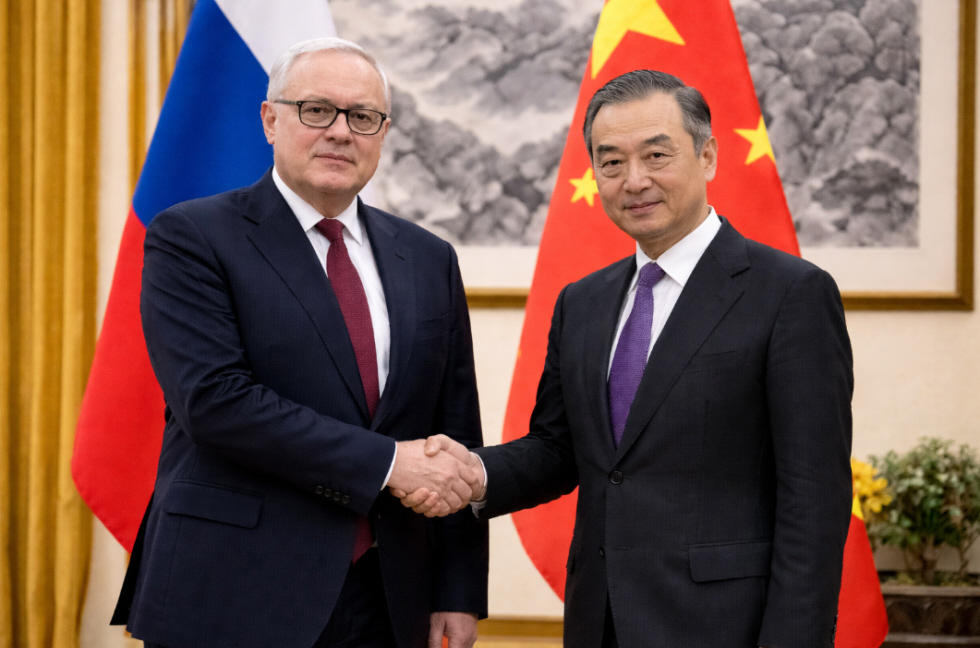
Russia has once again raised concerns in the global debate over nuclear arms control, warning that the United States has failed to respond to proposals aimed at extending existing strategic stability agreements. From Moscow’s perspective, the absence of a reply carries clear political meaning. Deputy Foreign Minister Sergei Ryabkov made the remarks during an official visit to Beijing, where he stressed that silence from Washington should not be interpreted as neutrality.
According to Ryabkov, the lack of engagement undermines efforts to establish a new framework for global security. Despite his criticism, Ryabkov sought to temper the message by stating that Russia does not intend to trigger a new arms race or engage in deliberate provocations. The emphasis, he suggested, remains on restraint rather than escalation. At the same time, Russian officials acknowledge that modernization of the country’s nuclear triad is well advanced.
This includes upgrades to land-based missiles, submarine-launched systems, and strategic aviation, all central components of Russia’s deterrence posture. Moscow argues that these measures are not designed to upset the global balance, but rather to adapt to evolving technologies and shifting security conditions. Maintaining a credible deterrent, Russian officials say, remains a core element of national defense policy. Ryabkov did not rule out a future resumption of arms control negotiations, though he made clear that progress would depend on a more constructive political environment and tangible commitments from the United States.
A central point of contention continues to be China’s role. Washington has repeatedly expressed interest in including Beijing in any future multilateral arms agreement, a proposal that China has consistently rejected. Russia has publicly aligned itself with China’s position, arguing that it is unrealistic to compel additional powers to join agreements that have historically been bilateral in nature. Moscow maintains that this demand complicates efforts to revive meaningful dialogue.
The exchange highlights a broader trend toward fragmentation in the international security landscape, where trust between major powers has eroded and traditional arms control mechanisms face mounting pressure. As diplomatic channels remain strained, the future of nuclear arms agreements appears increasingly uncertain, with major powers seeking to safeguard their security interests amid a rapidly changing global order.