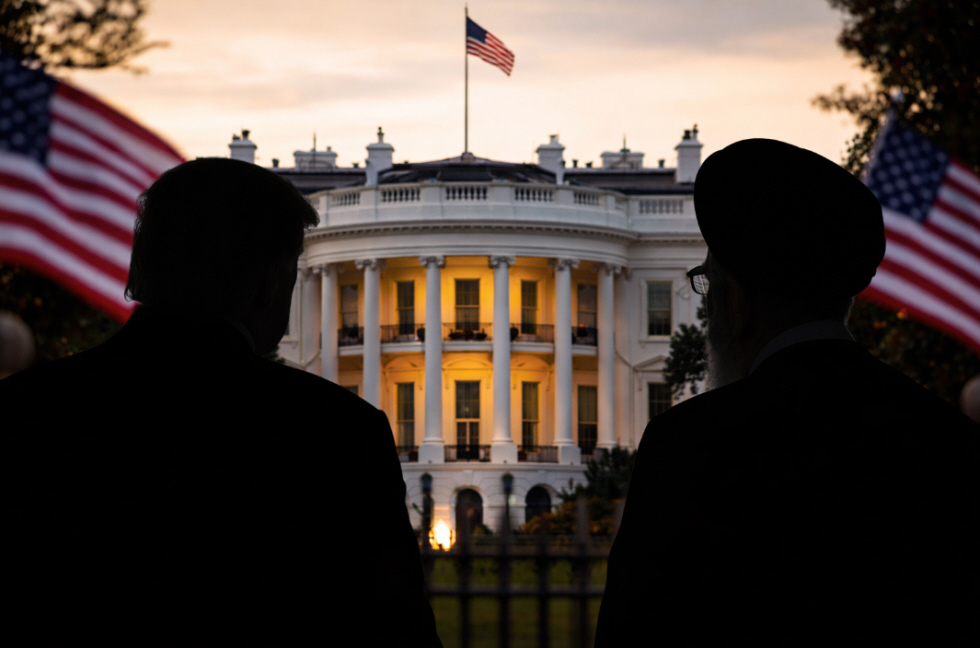
The White House has indicated that President Donald Trump has been briefed on a range of military options related to Iran. The signal appears to be aimed not only at the leadership in Tehran but also at a broader international audience. As protests continue to unfold inside the Islamic Republic, the administration is seeking to project firmness while stopping short of announcing any definitive course of action. In recent days, the president’s public remarks have grown more forceful as demonstrations inside Iran have intensified.
His statements, delivered through public appearances and social media, have included warnings about potential consequences if the repression of protesters continues. Such language captures attention and dominates headlines, but it also raises questions about how far these words are intended to go. Part of this approach reflects a familiar political style. Trump has long relied on direct and confrontational rhetoric as a tool of leadership. At the same time, it reflects a broader ambition to distinguish his presidency from those that came before, which his supporters often describe as overly cautious or hesitant in dealing with Tehran.
From this perspective, the president appears eager to be seen as decisive, someone willing to act where others chose engagement, restraint, or delay. That posture, however, carries weight beyond domestic politics. It shapes expectations among Iranians risking their safety in the streets, among regional allies closely monitoring developments, and within Trump’s own circle, where some voices continue to advocate for stronger action. The central challenge is that the available options are limited. None offers a clear or risk-free solution.
Each potential path carries consequences that could extend well beyond Iran’s borders, affecting regional stability and broader international interests. A military response, even if limited, could strengthen hardline elements within Iran’s leadership while undermining the very protesters it is meant to support. It could also trigger wider repercussions across an already volatile region, with economic and security implications that are difficult to predict.
At the same time, relying solely on strong rhetoric carries its own risks. Repeated warnings without follow-through can weaken credibility and create frustration among those who interpret such statements as implicit promises of support. In sensitive situations, words alone can raise expectations that policy may not be prepared to meet. As a result, the administration faces a delicate balancing act: signaling resolve without rushing into escalation, expressing concern for human rights without encouraging unrealistic hopes, and preserving regional stability while keeping diplomatic channels from closing entirely.
Ultimately, the test lies not in the sharpness of the language but in whether a coherent and sustainable strategy emerges. In a context as fragile as Iran’s current moment, every statement, gesture, and pause is closely scrutinized by allies and adversaries alike. For now, the situation remains defined by carefully calibrated messages and uncertainty. What happens next will depend less on public warnings and more on the choices made behind closed doors to prevent rhetoric from turning into a broader and more dangerous confrontation.