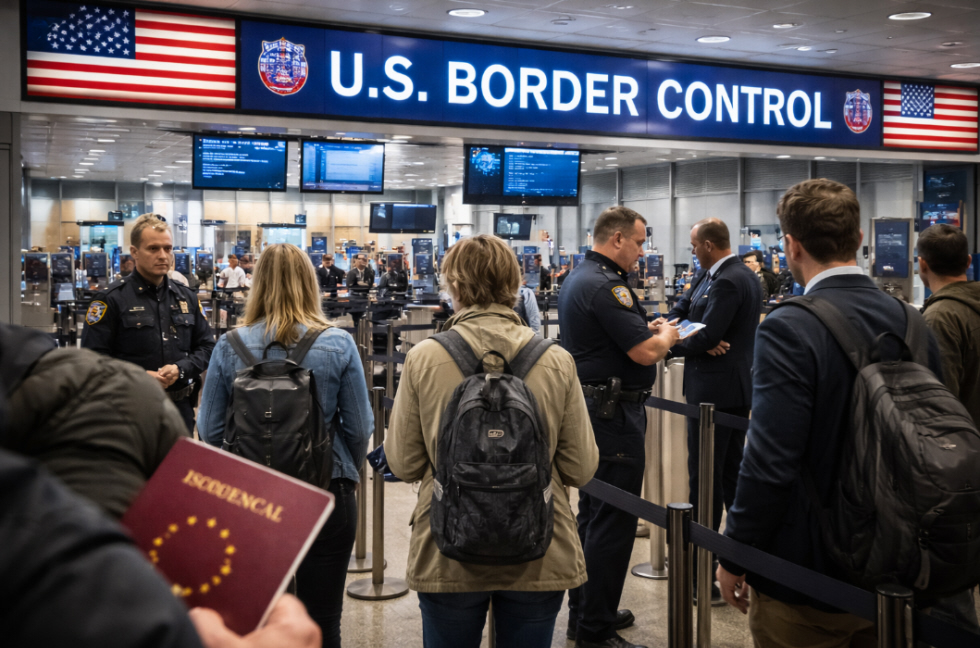
Since Donald Trump’s return to the presidency of the United States, the debate over border controls and traveler privacy has intensified once again, particularly in Europe. Authorities, legal experts, and civil rights groups are closely watching stricter immigration practices and their potential impact on foreign citizens entering the country. In recent years, European travelers have been warned that upon arrival in the United States they may be subject to more extensive screening, including the inspection of electronic devices and requests for additional personal information.
These measures, justified by Washington on national security grounds, have raised concerns among several European governments. Those concerns have grown amid internal discussions in the United States about expanding the use of biometric data in immigration and border control processes. European officials fear that Washington could eventually seek broader access to biometric databases managed by authorities across the continent, a scenario that would trigger complex legal and political challenges. From the European perspective, the main source of friction lies in data protection and strict privacy regulations.
European Union law places clear limits on the sharing of sensitive personal information, particularly when it involves fingerprints, facial recognition, or other biometric identifiers. U.S. authorities argue that these discussions are part of a broader effort to strengthen border security and prevent potential threats, stressing that any additional measures would be subject to legal frameworks and international agreements.
However, the lack of clarity surrounding the scope of these initiatives continues to fuel unease abroad. Digital rights experts warn that expanding the collection or exchange of biometric data could set troubling precedents, not only for European travelers but also for American citizens. Once again, the balance between security and civil liberties has moved to the center of political debate.
For travelers, the situation translates into growing uncertainty about what information may be requested when entering the United States and how that data might be used. Airlines, travel agencies, and consular offices have begun reinforcing advisories about existing rules and the importance of understanding rights and obligations before traveling.
As discussions continue, relations between the United States and Europe face a new test of trust and cooperation. The outcome of this debate will shape not only the future of border controls but also the broader transatlantic dialogue on privacy, security, and individual rights.