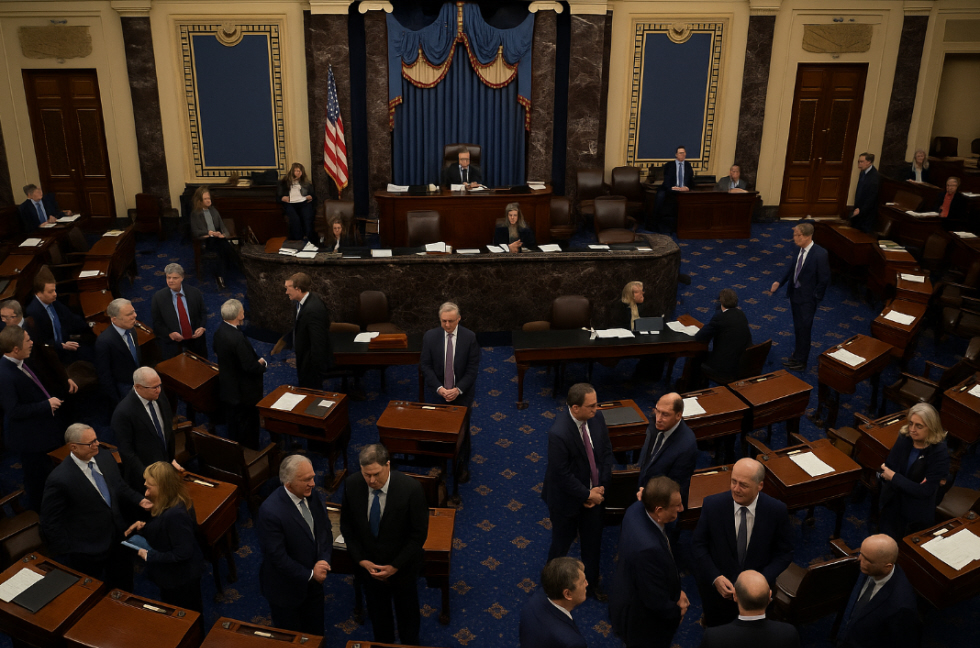
For the first time since the start of the bitter budget dispute in the United States, Republicans and Democrats have taken a concrete step toward ending the partial government shutdown. On Sunday night, the Senate approved the discussion of a temporary funding bill introduced by the House of Representatives, marking an important breakthrough in the political stalemate. However, the agreement only provides financing until January 30, 2026, meaning the conflict could reignite in just a few weeks.
The standoff, which has dragged on since early October, has largely paralyzed government operations. Thousands of federal workers remain unpaid, food assistance programs have been disrupted, and airports have faced massive flight delays and cancellations. While both parties accuse each other of using the crisis for political gain, polls indicate that most Americans blame President Donald Trump and the Republican Party for the prolonged shutdown — a perception that has caused friction even among Democrats themselves.
At the heart of the dispute lies the question of whether to extend health insurance subsidies, a key component of Trump’s recent tax reform. Democrats seek to maintain the financial support to prevent rising costs for millions of families, while Republicans resist altering one of the central pillars of their economic policy. Although the temporary deal includes a future vote on the issue before December, the risk of another budget deadlock remains high — and Washington may soon find itself facing the same impasse once again.
Trump in tears as Senate seeks to end prolonged government shutdown
Washington seeks a temporary exit — the Senate advances a bridge funding plan while divisions over health subsidies persist and the risk of another standoff looms.