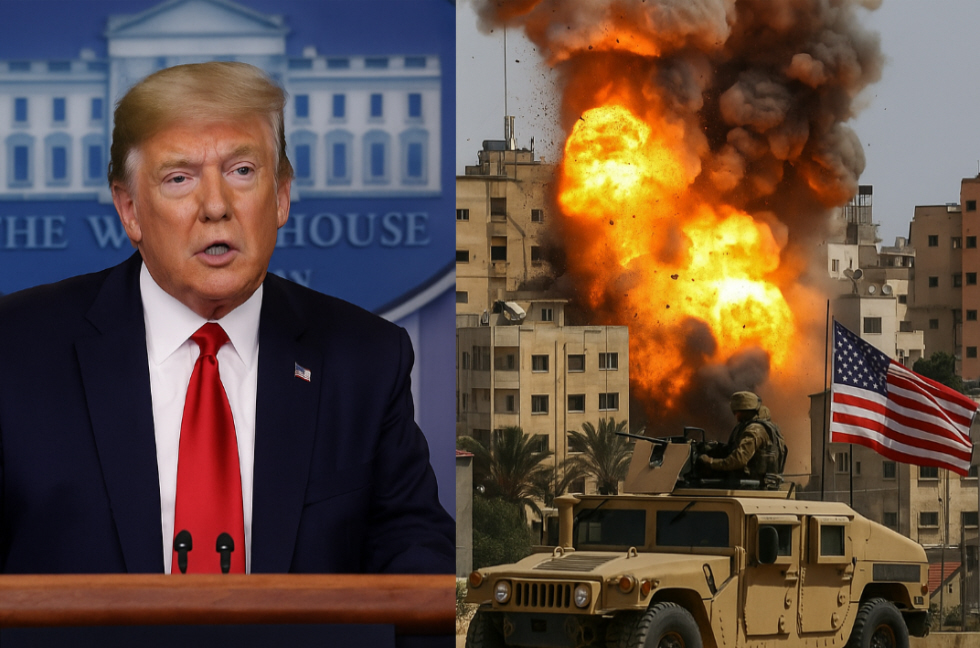
The United States government was caught by surprise after the airstrike carried out by Israel in Doha, the capital of Qatar, targeting Hamas leaders and leaving at least six people dead. The unprecedented operation in the Arab country generated a wave of international condemnation for violating Qatari sovereignty and escalating tensions in the Middle East.
What stood out the most was that Washington received no prior notice of the attack, and according to reports, President Trump was informed only ten minutes after the offensive began, exposing the lack of coordination and the weakening of the U.S. diplomatic role in the region.
Qatar, a key partner of the United States and host to one of its most important military bases, reacted with indignation and demanded immediate explanations, while Israel defended the action by arguing that it was a strategic strike against Hamas leaders.
The situation places the White House at a crossroads, as it must balance its historic support for Israel with the need to maintain stable relations with Qatar, a fundamental ally in terms of energy and regional security.
Analysts agree that this episode could mark a turning point in U.S. foreign policy in the Middle East, revealing both the loss of influence and the risk of greater diplomatic isolation at a moment of maximum geopolitical tension.