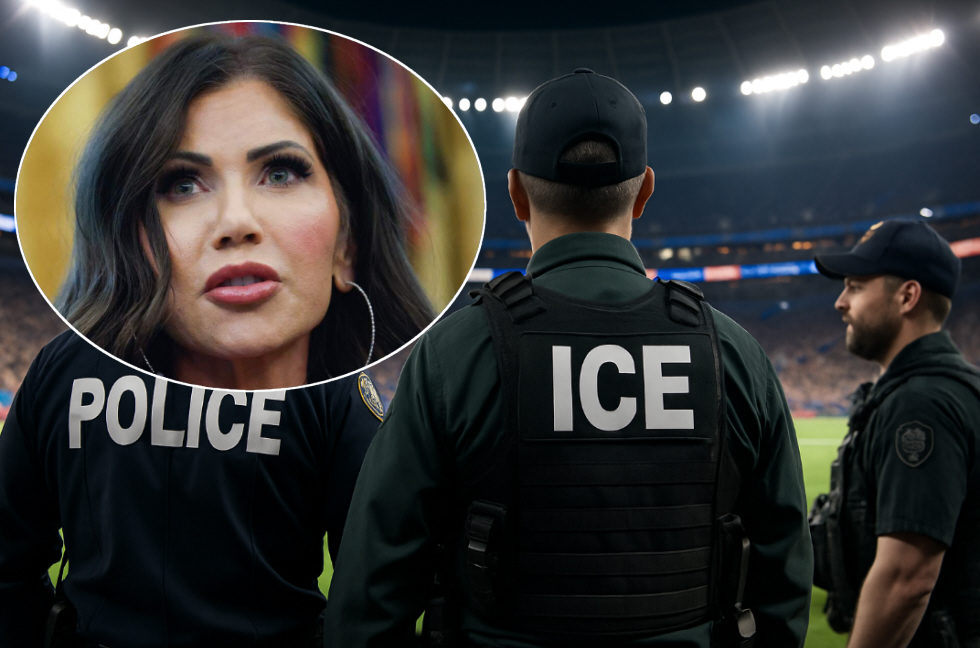
Political tension continues to rise in the United States as the White House announces new security measures ahead of the Super Bowl, one of the nation’s most-watched sporting events. Homeland Security Secretary Kristi Noem stated on Saturday that the Immigration and Customs Enforcement (ICE) agency will be “fully present” during the February event, where Puerto Rican artist Bad Bunny is set to headline the halftime show.
Noem’s remarks quickly sparked discussion among political and social observers, with some interpreting her words as a warning to the Latino community and foreign visitors. “The law will be respected, and we expect everyone attending to honor it and to love this country,” she said. At the same time, President Donald Trump announced the deployment of 300 National Guard members to Illinois, in coordination with the Pentagon and local authorities.
However, Democratic Governor JB Pritzker criticized the plan as “unnecessary and un-American,” emphasizing the state’s right to manage its own internal security. The White House later clarified that the deployment is intended to strengthen public safety at large gatherings, not to conduct immigration enforcement. Yet, figures close to President Trump, such as Corey Lewandowski, had previously hinted at possible ICE operations around the Super Bowl, leaving civil rights groups uneasy. Meanwhile, Bad Bunny — who has openly criticized President Trump’s policies in the past — has remained silent on the matter.
His Super Bowl appearance remains confirmed, and the NFL has assured that the event will proceed “in an atmosphere of respect and unity.” As the countdown to the Super Bowl continues, the focus extends beyond the field. The intersection of politics, culture, and entertainment at this year’s event may reveal much about America’s current social climate and the challenges it faces in preserving both security and inclusion.