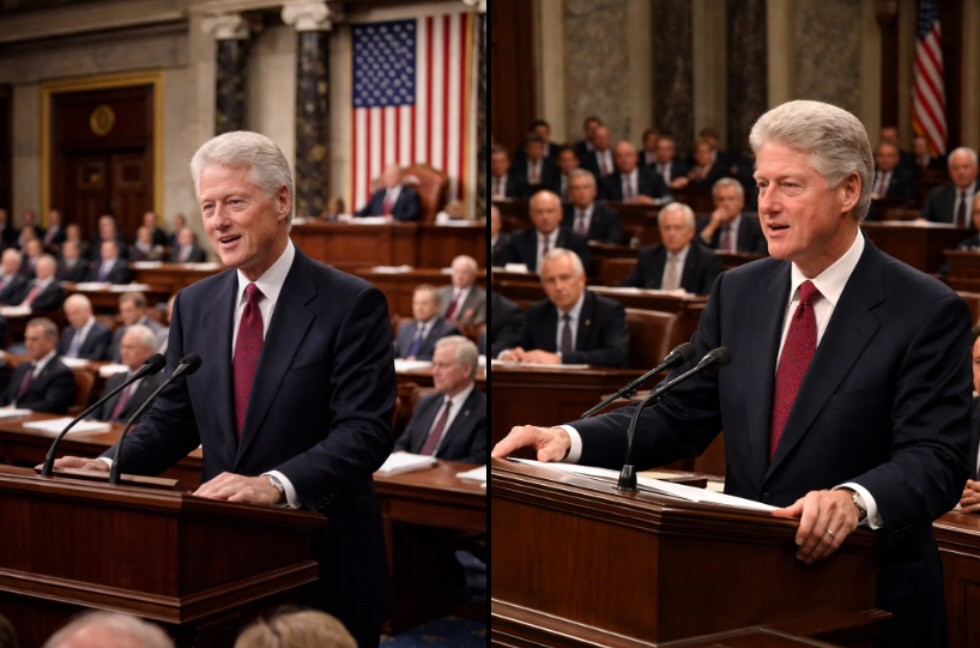
Former U.S. President Bill Clinton denied any involvement in the crimes committed by Jeffrey Epstein during his appearance before a congressional investigative committee. The testimony took place as part of a broader review examining the political and financial connections surrounding the late financier, who was accused of operating a sex trafficking network involving minors.
During the questioning, Clinton stated that he had no knowledge of Epstein’s illegal activities at the time they were in contact years ago. He described their relationship as occasional and social in nature, emphasizing that he never witnessed behavior that would have raised suspicions of criminal conduct. The former president explained that had he been aware of any criminal schemes, he would have acted immediately to report them.
He stressed that he neither participated in nor was present at any gatherings involving illegal acts, and that he was not given information that would have alerted him to wrongdoing. A significant portion of the inquiry focused on flights Clinton took aboard Epstein’s private jet. Clinton acknowledged traveling on the aircraft in the past, primarily in connection with philanthropic initiatives, but firmly maintained that those trips were unrelated to any unlawful activity. He also stated that his meetings with Epstein occurred in public or professional contexts and that he did not maintain a close or frequent relationship with him.
According to Clinton, their interactions were limited and did not reflect a deep personal association. Committee members questioned whether any contact continued after initial allegations against Epstein became public. Clinton responded that once accusations surfaced, he completely distanced himself and had no further communication with Epstein. In his testimony, the former president expressed unequivocal condemnation of sexual exploitation and abuse, describing such crimes as abhorrent and deserving of the full force of the law. He emphasized that victims deserve justice and accountability.
The hearing unfolded amid intense political and media scrutiny. Lawmakers are attempting to clarify not only individual responsibilities but also whether institutional failures allowed Epstein to operate for years without facing immediate consequences. Clinton underscored that his public life has long been subject to scrutiny and said he understands the importance of cooperating fully to ensure transparency. He stated that he answered questions thoroughly in order to dispel doubts and support the investigative process. To date, no formal charges have been brought against the former president in connection with the Epstein case.
However, his name has appeared in flight logs and court documents, keeping public debate active and ongoing. The broader investigation continues as authorities seek to map out the network of relationships surrounding Epstein, including political, business, and social figures. Lawmakers aim to determine whether any patterns of negligence or concealment contributed to the longevity of his operations.
Clinton’s testimony marks another significant development in one of the most controversial and sensitive cases in recent U.S. history, reigniting questions about power, influence, and accountability at the highest levels of public life.