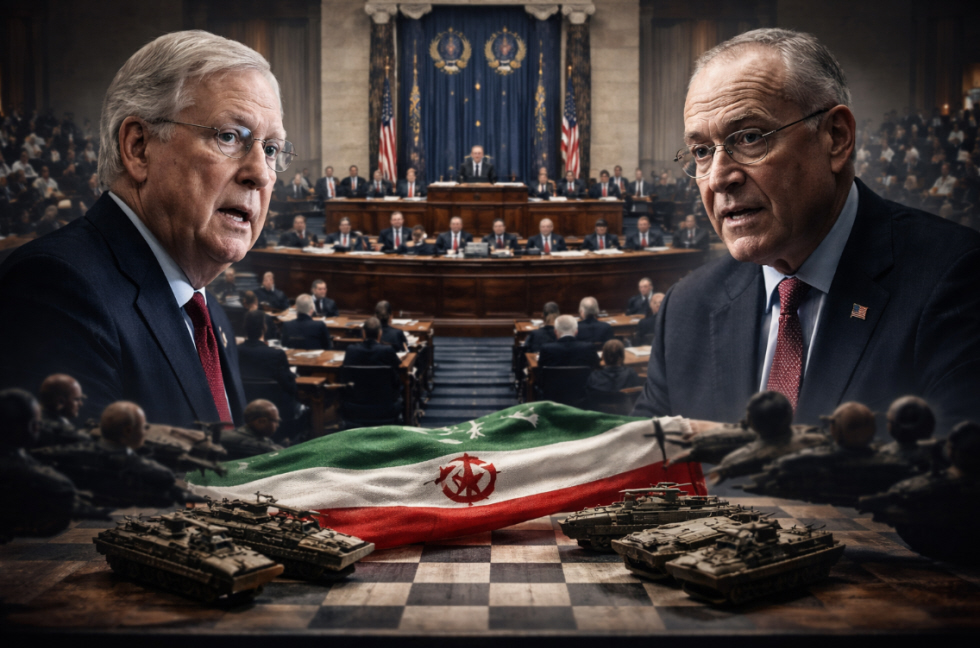
The United States Senate rejected a resolution aimed at ending the country’s military involvement in the conflict with Iran. The vote highlighted the deep political divisions in Washington and underscored the sharp differences between Republicans and Democrats over the use of military force abroad. In the chamber of one hundred senators, the resolution received 52 votes in favor and 47 against.
Although the measure secured a simple majority, it did not meet the requirements necessary to move forward in the legislative process and become a binding decision. The vote took place amid a tense political climate, with intense debate over the scope of presidential authority in matters of foreign policy and military operations. Some lawmakers argued that Congress must play a stronger role in overseeing prolonged military engagements. Nearly all Republican senators opposed the procedural motion, effectively supporting the military strategy promoted by President Donald Trump.
For that political bloc, military pressure against Iran is seen as a necessary tool to protect U.S. strategic interests in the Middle East. Republican lawmakers warned that restricting military operations at this moment could send signals of weakness to international adversaries. They also argued that any premature withdrawal could disrupt the fragile security balance in the region. Meanwhile, most Democratic senators supported the resolution, arguing that Congress must exercise its constitutional authority when it comes to decisions involving armed conflict.
According to that bloc, the country should not remain involved in a war without clear authorization from the legislative branch. Democrats also stressed that foreign policy should rely on a broader strategy combining diplomacy, economic pressure, and international alliances. They expressed concern that continued military escalation could spread instability across the region. The debate in the Senate reflects a broader discussion within U.S. politics regarding the limits of executive power during times of conflict.
Over the past decades, several presidents have faced similar criticism for using military force without a formal declaration of war from Congress. At the same time, tensions with Iran continue to influence geopolitical dynamics far beyond the Middle East, affecting global energy markets and international stability. Analysts warn that further escalation could carry significant economic and strategic consequences.
The Senate vote does not end the political debate in Washington. Instead, it leaves open a discussion that is likely to continue in the coming weeks as the country evaluates the direction of its foreign policy and its role in one of the most sensitive conflicts on the global stage.