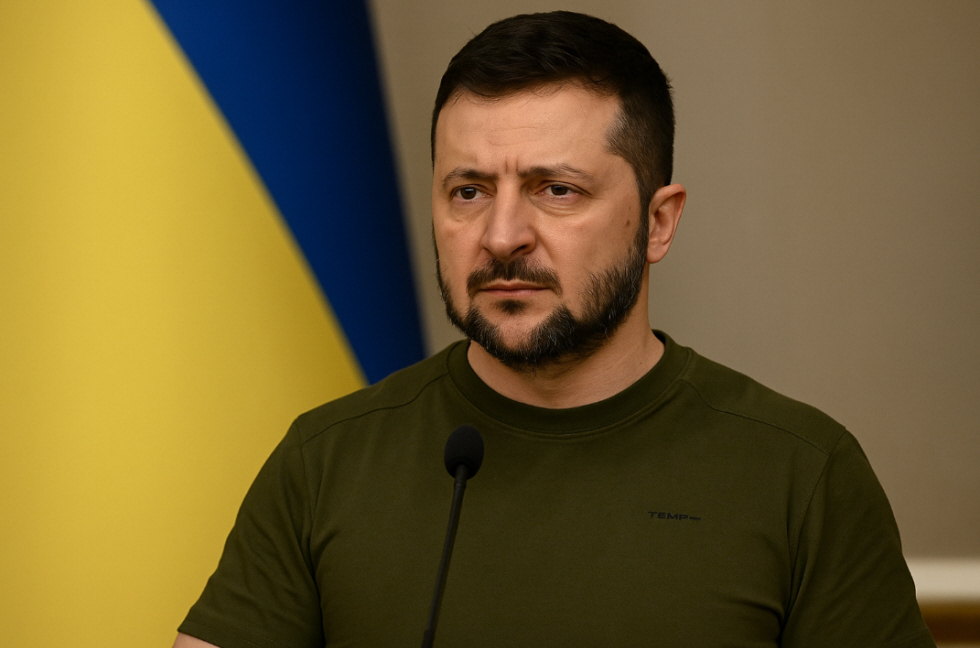
Ukrainian President Volodymyr Zelensky warned that Europe could face an even larger war in the coming years if Russia is not stopped now. According to Zelensky, Moscow’s accelerated push to expand its production of weapons and military equipment indicates that the Kremlin is preparing for a major conflict “in 2029 or 2030.”
He stressed that there are no signs on the battlefield that Russia intends to end its invasion of Ukraine. Instead, the continuous attacks and the rapid growth of Russia’s defense industry point to a clear objective: prolonging the war and increasing its capacity for large-scale confrontation.
Given this scenario, Zelensky once again urged Ukraine’s international partners to apply much stronger pressure on Moscow. He argued that the only way to force Russia to halt its aggression is to drastically limit its ability to finance and sustain its war machine. Zelensky called on allied nations to “think about how to stop the Russians in Ukraine now,” which means cutting off all possible revenue streams—especially from energy—and blocking access to weapons and military technology.
He noted that existing sanctions on major Russian oil companies such as Rosneft and Lukoil are already producing consequences, estimating that Russia could lose at least 50 billion dollars within a year. For Zelensky, this demonstrates the power of coordinated sanctions if applied more broadly and consistently. Meanwhile, the war continues to evolve on the ground.
Russia announced the capture of additional villages in eastern Ukraine, including Synelnykove in the Kharkiv region and Danylivka in the Dnipropetrovsk region. Although these territorial gains are relatively small, Moscow uses them to reinforce its narrative of military progress and maintain psychological pressure on Kyiv. For Ukraine, these developments are a reminder that time favors a Russia shifting its entire economy toward a prolonged war effort, while Kyiv insists that only a united and sustained response from its allies can prevent the conflict from expanding even further beyond Ukrainian borders.