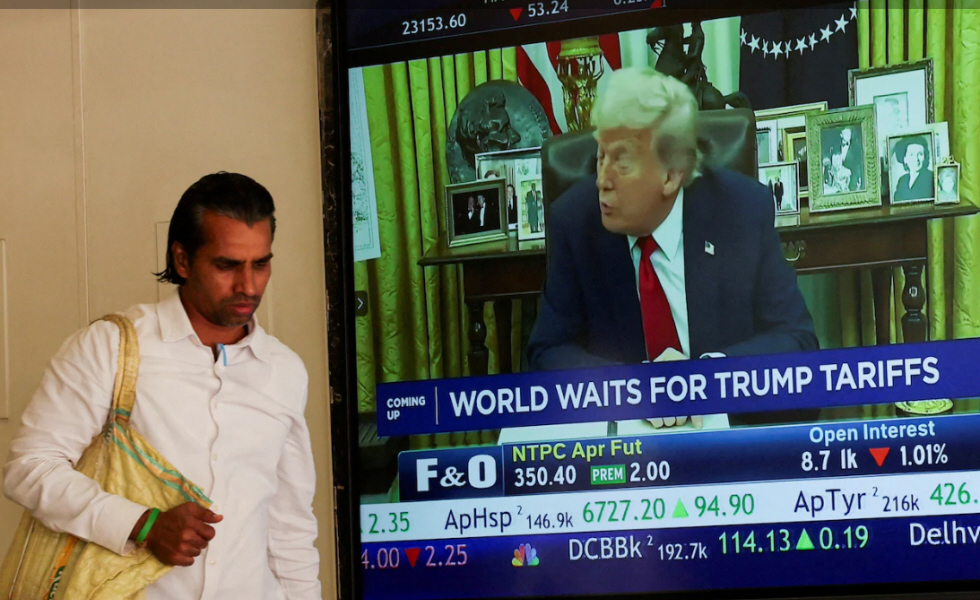
In a move that is likely to escalate trade tensions and reshape economic relations between two of the world’s largest democracies, U.S. President Donald Trump has announced the imposition of a 25 percent import tariff on Indian goods, effective August 1st. The announcement was made through his social media platform, Truth Social, and marks a renewed wave of economic pressure on India.
Trump justified the decision by highlighting what he described as India’s “excessively high tariffs” on foreign imports. “Although India is our friend, the trade balance has been anything but fair,” the president wrote. “India’s tariffs are among the highest in the world, making it extremely difficult for American products to compete in their market.”
He emphasized that despite cordial diplomatic ties, bilateral trade has remained disproportionately low, and this step aims to correct what he called “a deeply unfair relationship.” Adding fuel to the fire, Trump also criticized India’s continued military and energy cooperation with Russia, noting that the South Asian nation remains one of Moscow’s largest customers for oil and defense equipment, alongside China.
“At a time when the world is urging Russia to stop its aggression in Ukraine, India continues to fund the very nation responsible for violence,” Trump asserted. He added that a punitive surcharge would be applied as a “penalty” for India’s strategic ties with Russia. Earlier this year, Trump had temporarily imposed a 26 percent tariff on Indian imports but suspended the measure to give diplomatic negotiations a chance.
However, recent talks between U.S. and Indian trade representatives appear to have broken down, paving the way for this renewed enforcement. Trump expressed disappointment in the lack of progress and declared, “We’ve been more than patient. Now it’s time to act.” The White House stated that the tariff would apply broadly to a wide range of Indian goods, potentially affecting key exports such as textiles, pharmaceuticals, and technology components.
U.S. trade officials estimate that the trade deficit with India exceeds $40 billion annually, and the new tariff aims to close that gap. India has not yet officially responded to the latest measures, but analysts warn that retaliation could follow. Experts suggest that this development could strain diplomatic ties and hamper ongoing discussions related to defense cooperation, climate policy, and digital infrastructure.
With U.S. elections approaching, Trump’s decision appears to resonate with a growing segment of the American electorate concerned about domestic industry, job protection, and global trade imbalances. However, critics argue that protectionist measures could backfire, leading to higher consumer prices and diplomatic fallout. As the world watches closely, this new chapter in U.S.-India relations signals a turbulent period ahead — one where economics and geopolitics are increasingly intertwined.