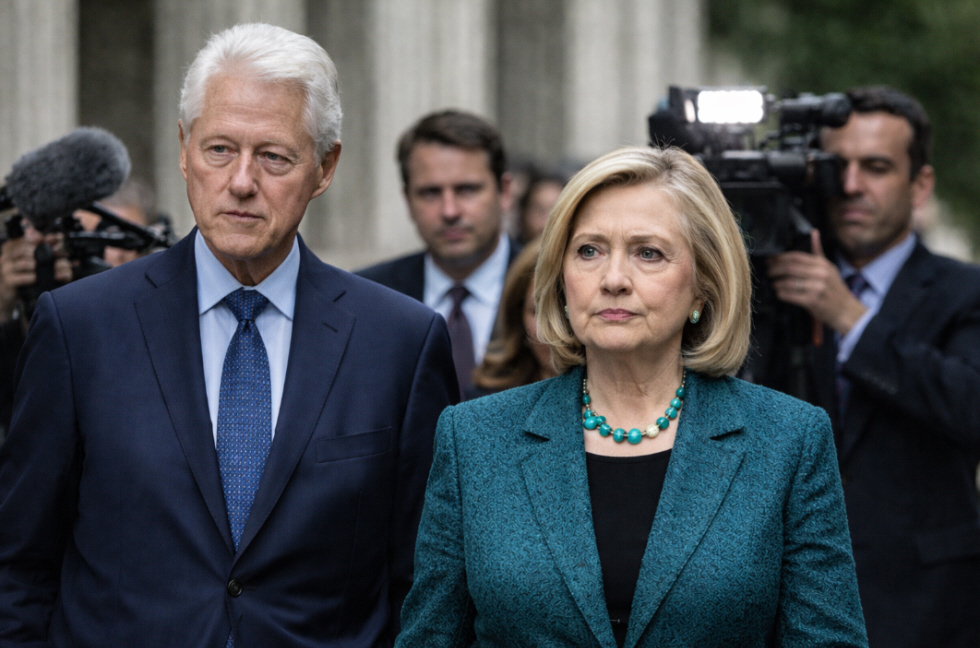
Former U.S. President Bill Clinton and former Secretary of State Hillary Clinton have declined to testify before the U.S. Congress as part of the investigation related to convicted sex offender Jeffrey Epstein. The decision was communicated in a joint letter sent to Republican Representative James R. Comer, chairman of the House Oversight Committee, according to U.S. media reports.
In the letter, the Clintons argue that the subpoenas issued by the committee are legally invalid and fail to meet constitutional standards governing congressional investigations. They maintain that, under these circumstances, they are not obligated to appear and will formally resist the requests. The tone of the letter is notably forceful. The Clintons describe the investigation as politically motivated and characterize it as a form of political trial that, in their view, is designed to lead to criminal consequences.
They state that the time has come to stand their ground, “regardless of the consequences.” The House Oversight Committee has argued that the Clintons’ testimony is necessary to clarify potential connections to Epstein, who maintained extensive relationships with influential figures in politics, finance, and high society. Those connections have fueled years of speculation about the broader scope of the scandal and who may have been aware of Epstein’s criminal activities.
Public attention on the case intensified recently following a court-ordered release of Epstein-related documents, ending a prolonged period of legal and political resistance. The disclosure renewed public debate over accountability, institutional failures, and the handling of one of the most sensitive criminal cases in recent U.S. history. Former President Donald Trump has since repeatedly drawn attention to Bill Clinton in public remarks, alleging past associations with Epstein, including claims of visits to one of Epstein’s private properties. Clinton’s representatives have rejected these assertions, accusing Trump of politicizing the issue and redirecting scrutiny toward political opponents.
In December, Bill Clinton’s spokesman Angel Urena stated on social media that there are two distinct groups of individuals connected to Epstein: those who severed ties with him before his crimes became public, and those who continued their association afterward. Urena said the Clintons belong to the first group and had no knowledge of Epstein’s illegal conduct. Representative Comer has warned that failure to comply with the subpoenas could lead to contempt of Congress proceedings.
However, the Clintons’ legal team notes that both have previously provided sworn statements and assert that they possess no additional relevant information. Their attorneys argue that the subpoenas lack a legitimate legislative purpose and exceed constitutional limits on congressional oversight. Jeffrey Epstein, a New York financier, was accused of running a long-standing sexual abuse network involving dozens of victims, including minors, across multiple states. He died in federal custody in 2019 at the age of 66 before facing further prosecution, leaving unresolved questions that continue to reverberate across the U.S. political and legal landscape.