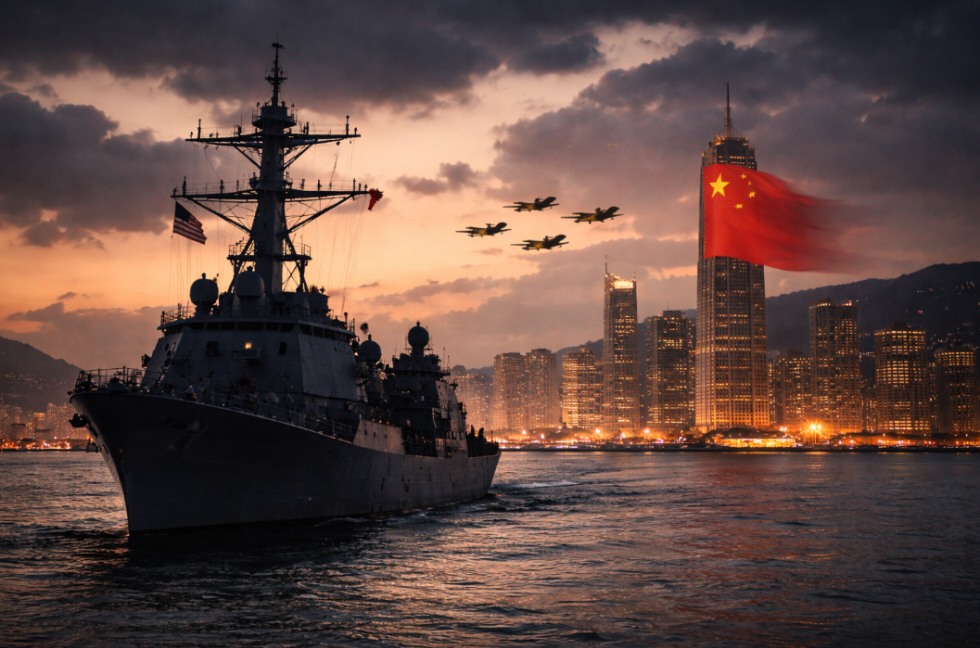
China’s expanding military capabilities could eventually allow Beijing to exert decisive control over trade access in the Indo-Pacific, according to a newly released U.S. national defense strategy that places the region at the center of American security and economic interests. The document warns that the balance of power in the world’s most economically dynamic region is shifting at a pace not seen since the 19th century.
The strategy underscores that the Indo-Pacific is expected to account for more than half of global economic output in the coming years, making unrestricted access to its trade routes essential to U.S. prosperity and security. It argues that America’s ability to engage in the region “from a position of strength” will determine whether it can protect its economic interests against growing strategic pressure. Notably, the document adopts a more restrained tone toward Beijing than previous policy papers, avoiding direct references to ideological confrontation while maintaining a clear focus on military deterrence.
At the same time, it signals a recalibration of priorities by describing Russia’s military threat as largely regional, centered on Eastern Europe, and secondary to the broader challenge posed by China’s rise. The report has intensified scrutiny of Britain’s planned handover of the Chagos Islands to Mauritius, a move that would see the United Kingdom retain access to the strategically vital U.S.–UK military base on Diego Garcia through a long-term lease. Critics argue that the transfer could complicate Western military positioning in the Indian Ocean at a time of heightened geopolitical competition.
Political tensions between Washington and London have further sharpened the debate. The Chagos agreement has become entangled in broader strains between President Donald Trump and Prime Minister Keir Starmer, with disputes over defense policy, alliance commitments, and past military operations adding to the friction. British officials insist the deal remains essential to national security, while opposition figures have framed it as a strategic concession.
Together, these developments highlight the growing complexity of alliance management in an era where economic power, military reach, and geopolitical influence are increasingly intertwined—particularly in a region that is fast becoming the centerpiece of global competition.