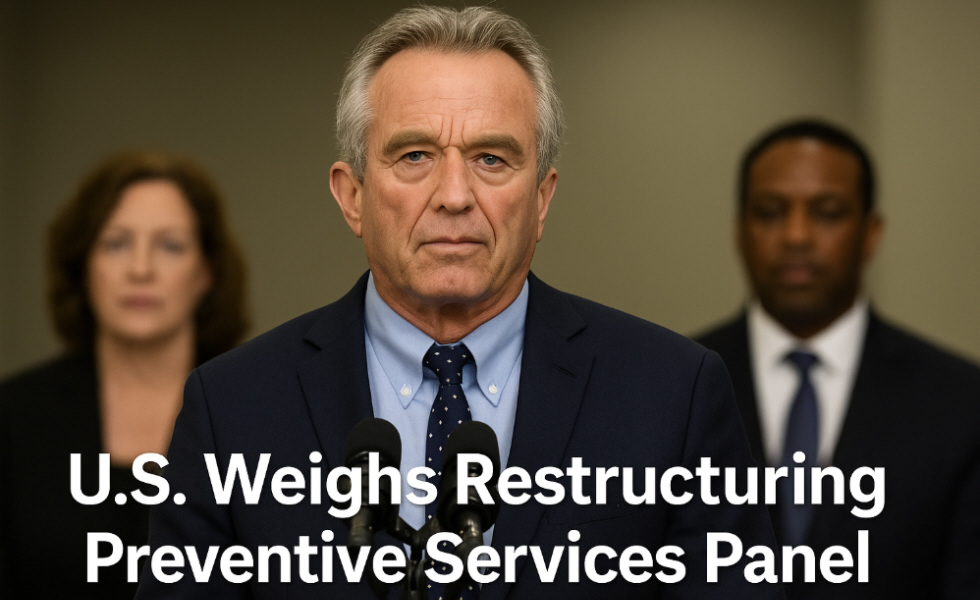
In a move that could profoundly reshape the preventive health approach of the United States healthcare system, the Department of Health and Human Services, under the leadership of Secretary Robert F. Kennedy Jr., is currently evaluating a significant restructuring of the federal panel known as the U.S. Preventive Services Task Force.
This group, currently composed of 16 expert members, is responsible for issuing key clinical recommendations on which preventive services—such as cancer screenings, treatments to prevent chronic diseases or infections like HIV—should be covered by health insurance plans under the Affordable Care Act (ACA).
According to recent reports, the reform would aim not only to replace the current panel members but also to expand its composition to include more diverse voices, both in terms of experience and background.
The proposed additions would include non-physician healthcare professionals, representatives from vulnerable communities, and public health experts with a broader vision of population health needs.
This decision has sparked intense debate among health experts, lawmakers, and insurance companies, as the panel's recommendations have direct implications for access, coverage, and healthcare costs for millions of Americans. If implemented, the restructuring could radically change the criteria for evaluating preventive benefits, allowing for greater inclusion of alternative approaches, community-based medicine, or emerging therapies.
On the other hand, critics of the initiative warn that politicization or weakening of the panel’s scientific rigor could jeopardize the objectivity and evidence-based foundation of health decision-making.
Kennedy’s proposal has not yet been formalized, but sources close to the Department of Health indicate that preparations are advancing rapidly and that an official announcement could be made before the end of the summer. If realized, it would mark a major shift in the management of the U.S. preventive healthcare system—opening new possibilities, but also raising new regulatory, ethical, and scientific challenges.