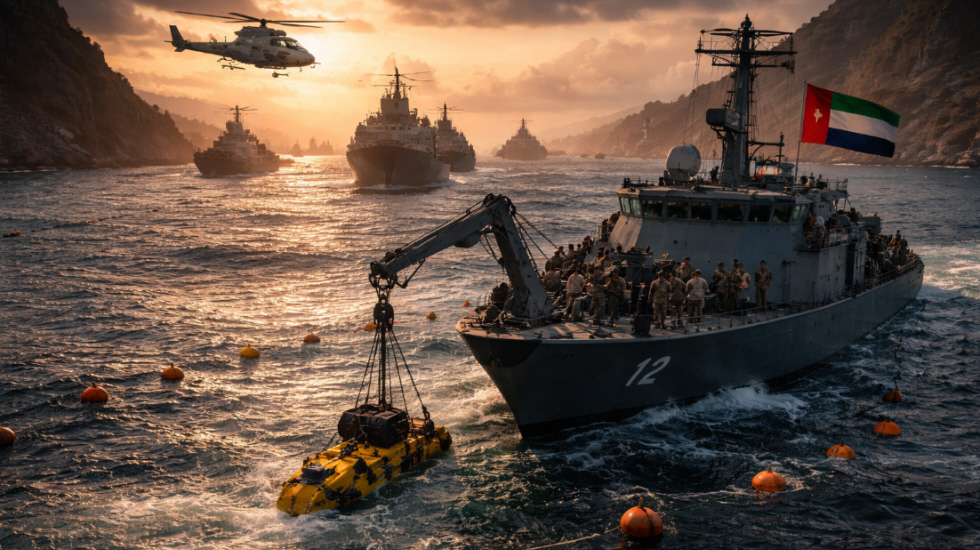
The United Arab Emirates is signaling a decisive shift in its role within the escalating crisis surrounding the Strait of Hormuz, moving from a regional observer to a potential active participant. The change reflects growing concern among Gulf nations over the economic and strategic consequences of prolonged disruption in one of the world’s most critical maritime routes.
According to regional sources, UAE officials are actively encouraging the United Nations Security Council to consider authorizing military action aimed at restoring safe passage through the strait. This marks a significant diplomatic step, as it introduces the possibility of coordinated international intervention. The UAE has also indicated its willingness to participate in a coalition led by the United States, potentially contributing naval assets, logistical support, and mine-clearing operations.
Such involvement would place the country directly at the center of a high-risk geopolitical confrontation. The Strait of Hormuz remains a vital artery for global energy supply, and any prolonged closure or restriction has immediate consequences for oil markets and international trade. For Gulf economies, ensuring its accessibility is not only a strategic priority but an economic necessity. This evolving stance underscores a broader regional alignment, where countries are increasingly prepared to take more assertive measures to protect critical infrastructure and trade routes.
The shift also reflects mounting pressure on diplomatic channels that have so far failed to de-escalate the situation. At the same time, the potential for military intervention introduces new risks. Any operation to secure the strait would require precise coordination and carries the possibility of unintended escalation with Iranian forces controlling the area. International stakeholders are closely monitoring the situation, as the balance between diplomatic resolution and military response becomes increasingly fragile.
The involvement of additional regional actors could either stabilize the situation or further complicate it. Energy markets are already reacting to these developments, with volatility reflecting uncertainty over whether a coordinated intervention could successfully restore normal shipping flows or trigger broader conflict.
The coming days will be critical in determining whether diplomatic efforts can still prevail or if the situation will move toward a more direct confrontation. The UAE’s position suggests that patience within the region is rapidly diminishing. As tensions rise, the Strait of Hormuz is no longer just a geopolitical flashpoint — it is becoming the stage for a potential multinational response that could redefine power dynamics across the Middle East.