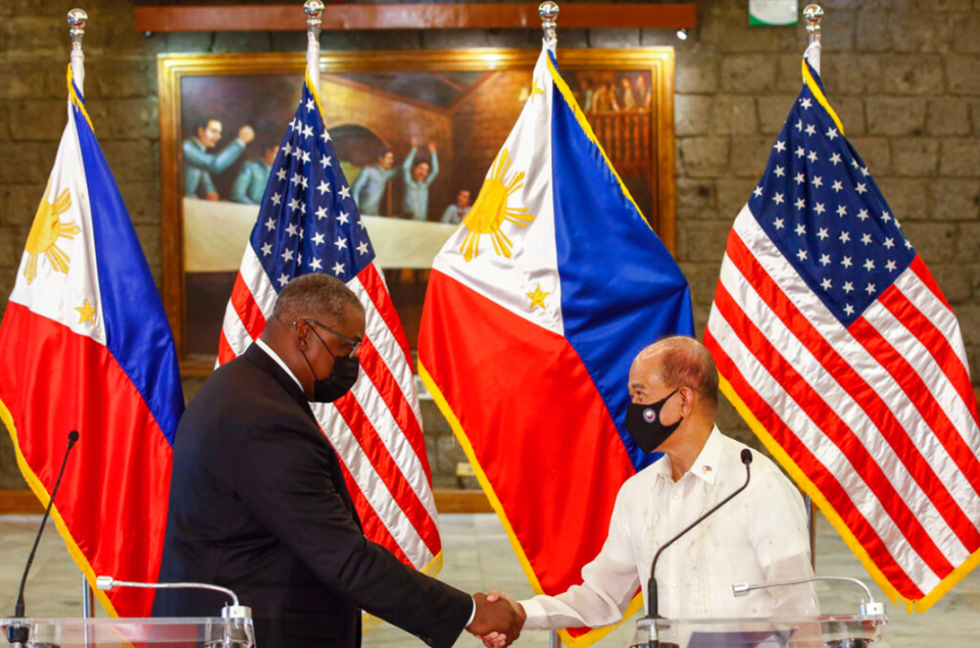
U.S. and Philippine military forces have conducted a joint inspection of a newly established Philippine forward operating base in the strategically significant province of Batanes, signaling a deepening of defense cooperation between the two allies amid rising regional tensions linked to China and Taiwan. The inspection highlights the growing importance of Batanes, an island group located at the northernmost edge of the Philippines, which sits along the Luzon Strait, one of the most critical maritime corridors connecting the South China Sea to the broader Pacific Ocean.
From Washington’s perspective, the Luzon Strait holds major strategic value, as control of the area could play a decisive role in limiting the People’s Liberation Army Navy’s ability to move freely into the Pacific during a potential regional conflict. The geographical position of Batanes places it close to southern Taiwan, reinforcing its relevance in contingency planning scenarios involving cross-strait tensions. The United States and the Philippines are bound by a Mutual Defense Treaty, under which both sides have committed to supporting each other in the event of an armed attack, a framework that has gained renewed attention as security dynamics in the Indo-Pacific evolve.
China considers Taiwan part of its territory and has repeatedly stated that reunification may be achieved by force if necessary. In recent years, Beijing has significantly increased military pressure around the island, conducting large-scale exercises, naval patrols and air operations near Taiwanese airspace and waters. These actions have heightened concerns among regional actors and U.S. allies, prompting closer coordination and expanded defense planning aimed at deterrence and stability rather than direct confrontation. The inspection of the Batanes base reflects broader efforts by Washington and Manila to enhance interoperability, logistics readiness and situational awareness in areas considered strategically sensitive.
Philippine officials have emphasized that the facilities are intended to strengthen national defense capabilities and disaster response, while U.S. officials view the cooperation as part of a wider regional strategy to maintain freedom of navigation and uphold existing security commitments. Although neither side has framed the move as targeting a specific country, the timing and location of the inspection underscore the shifting balance of power in the Indo-Pacific.
As geopolitical competition intensifies, Batanes is increasingly seen as a key geographic link between Southeast Asia and Northeast Asia. The evolving military cooperation between the United States and the Philippines illustrates how regional alliances are adapting to new security challenges, with a focus on preparedness and deterrence. While diplomatic channels remain active, developments such as this inspection highlight the growing role of strategic positioning and defense coordination in shaping the future stability of the region.