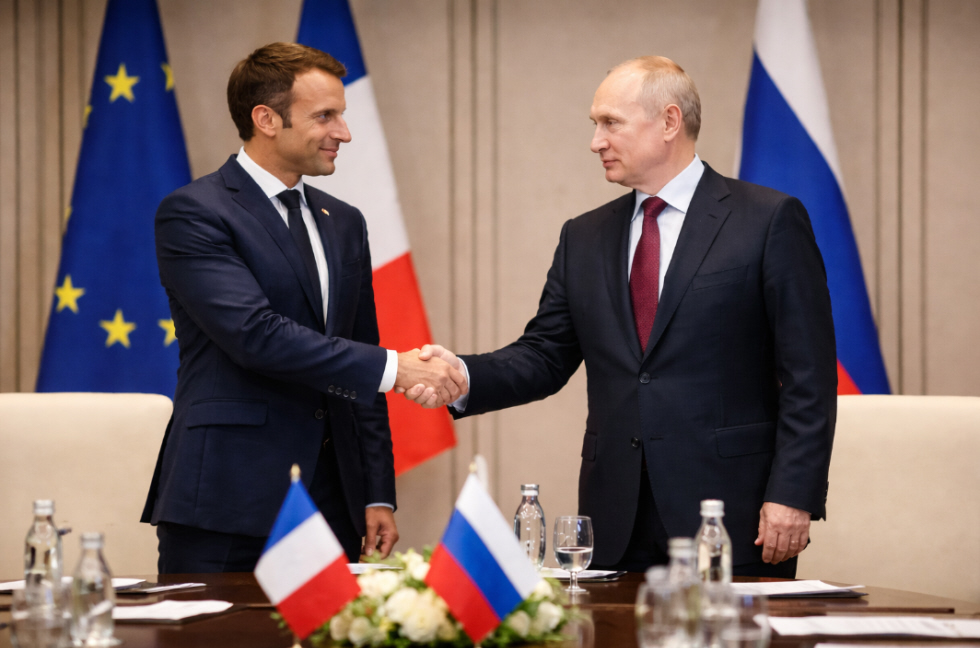
French President Emmanuel Macron has signaled his openness to resuming direct dialogue with his Russian counterpart, Vladimir Putin, in a move that suggests a cautious attempt to reopen diplomatic channels amid prolonged international tensions. Macron welcomed the indication coming from Moscow after the Kremlin confirmed that the Russian leader is “ready for dialogue,” a statement conveyed publicly by presidential spokesperson Dmitry Peskov.
From Paris, officials emphasize that despite deep political and strategic disagreements, maintaining communication between European powers and Russia remains useful for managing crises and preventing further escalation in an already volatile global environment. Macron had stated on Friday that it would be “useful to speak again” with the Russian president, pointing to the importance of exchanging views at a time when the war in Ukraine continues to shape relations between Russia and the West.
While no specific date or format for a potential meeting has been confirmed, both sides suggested that contact could take place in the coming days, prompting cautious expectations within European diplomatic circles. The last direct conversation between Macron and Putin occurred on July 1, 2025, during a lengthy videoconference lasting more than two hours, marking their first substantive exchange in several months.
That call was also the most significant contact since their widely noted face-to-face meeting on February 7, 2022, when the two leaders sat across from each other at an unusually long white table in Moscow, just weeks before the outbreak of the war in Ukraine. That image later became one of the most striking symbols of the subsequent breakdown in relations between Russia and European capitals.
Since then, high-level political dialogue has largely stalled, replaced by official statements, indirect contacts, and multilateral diplomacy. Against this backdrop, the possibility of renewed talks at the highest level is seen by some analysts as an effort to reintroduce direct diplomacy into a frozen relationship, though expectations for immediate breakthroughs on core disagreements remain limited. For now, both Paris and Moscow are maintaining measured rhetoric.
France continues to stress its commitment to international law and its support for Ukraine, while Russia reiterates its strategic positions and criticism of Western policies. Nevertheless, the mutual willingness to engage in dialogue suggests that, at least on the diplomatic front, both sides recognize the value of keeping channels open at a moment when European stability remains fragile and even symbolic gestures of communication carry significant weight.