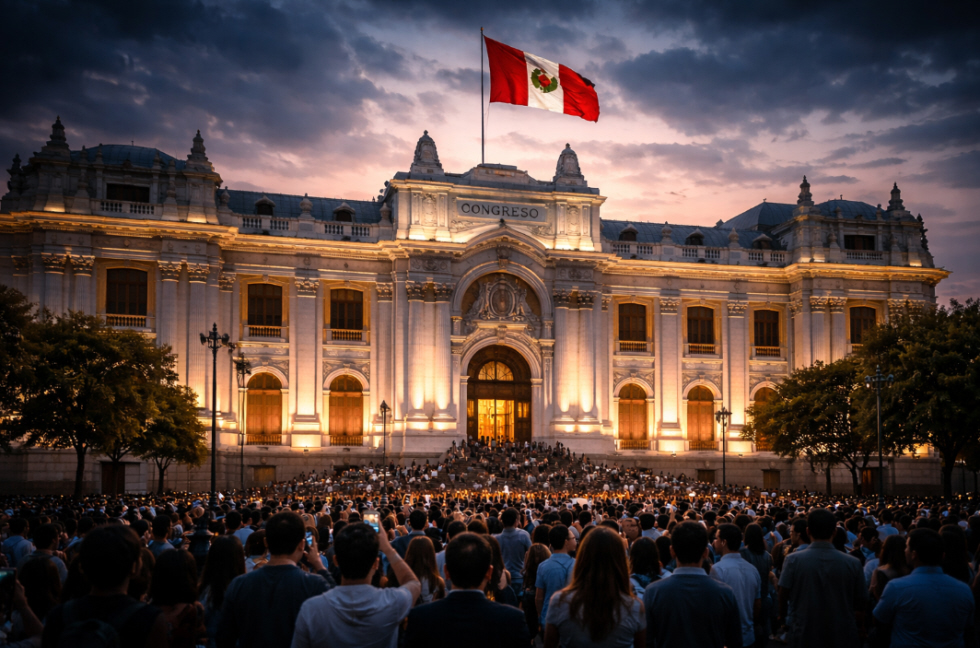
Peru is once again facing political instability after Congress voted to remove President José Jerí from office, just four months into his tenure. The decision adds another chapter to a prolonged period of institutional turbulence in the South American nation. With 75 votes in favor out of 102 lawmakers, the motion of censure passed in Congress, forcing Jerí from power. A successor is expected to be selected by parliament in the coming days amid an already fragile political climate.
Jerí had assumed executive responsibilities in October following the removal of former President Dina Boluarte. His leadership was widely viewed as a temporary effort to stabilize a system that has struggled with repeated power shifts. The allegations against him included unofficial meetings with foreign business representatives and purported irregularities in government appointments. During the parliamentary debate, several lawmakers questioned the transparency of his actions.
Jerí consistently denied any wrongdoing, maintaining that he had not committed any criminal offense. Ahead of the vote, he defended his record and suggested that the accusations were politically motivated. The removal comes less than two months before presidential elections scheduled for April, increasing uncertainty ahead of a crucial electoral process.
The recurring leadership changes have further weakened public confidence in the country’s institutions. In fewer than ten years, Peru has had seven presidents, underscoring the persistent fragility of its political system. The last president to complete a full five-year term was Ollanta Humala, who governed from 2011 to 2016. Political analysts argue that the ongoing confrontation between the executive and legislative branches has been a structural driver of the crisis.
The lack of sustained political consensus continues to hinder long-term governance. Whoever emerges as the next leader will face the immediate challenge of restoring stability in a country dealing with accumulated social and economic pressures. A swift and orderly transition will be critical to avoiding further institutional strain.
For now, Peru remains in a state of political uncertainty. The upcoming succession and imminent elections once again place the country at the center of regional discussions about democratic governance and stability.