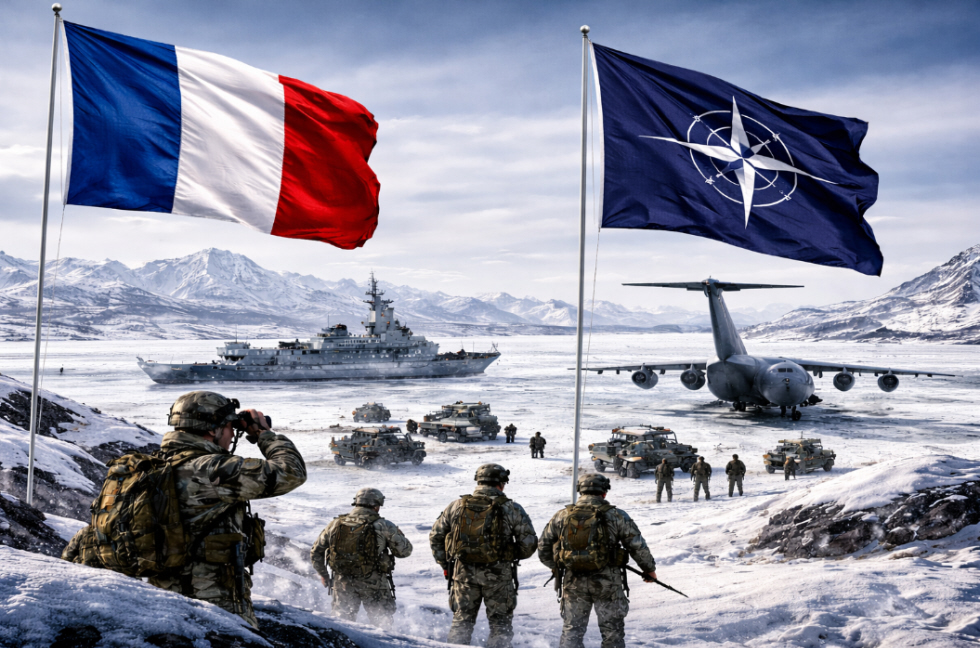
France has proposed holding a formal NATO exercise in Greenland, an initiative that reflects growing European concern over security in the Arctic. The Élysée Palace confirmed that Paris is ready to actively contribute to such maneuvers, at a time when the region has taken on increasing strategic importance in the global balance of power. The French proposal comes amid rising tensions between the United States and several European allies, particularly following repeated statements by U.S. President Donald Trump expressing interest in taking control of Greenland, an autonomous territory belonging to the Kingdom of Denmark. These remarks have raised alarm across Europe and reignited debates over sovereignty and Arctic defense.
In recent months, several European countries—including France, Germany, and the United Kingdom—have deployed military personnel to Greenland to take part in reconnaissance missions linked to Danish-led exercises. However, these activities have been conducted outside NATO’s formal framework, largely to avoid escalating political tensions with Washington. A fully sanctioned NATO exercise would significantly alter the current dynamic. Maneuvers carried out under the Alliance’s umbrella would directly involve the United States and send a clear signal of transatlantic unity in addressing security challenges in the Arctic, particularly amid the expanding presence of Russia and China in the region.
French officials argue that such a step would demonstrate Europe’s willingness to take greater responsibility for its own defense and acknowledge that Arctic security cannot be shaped solely by the interests of a single power. The initiative also aims to strengthen coordination among allies in an increasingly contested geographic arena. President Trump has repeatedly emphasized that Greenland is vital to the security of both the United States and NATO, citing its strategic location and natural resources.
When asked how far he would be willing to go to achieve his objectives regarding the island, Trump offered an ambiguous response, further fueling uncertainty among European partners. His remarks have unsettled several European capitals, where officials are increasingly concerned about the use of trade threats and political pressure in matters they view as primarily related to collective defense and security.
Against this backdrop, France’s proposal seeks to bring the debate back within the institutional framework of the Alliance. The discussion over a NATO exercise in Greenland highlights a broader shift in transatlantic relations. Europe is attempting to assert greater strategic autonomy without breaking ties with the United States, while the Arctic emerges as a central arena of global competition, where every diplomatic and military move carries growing significance.