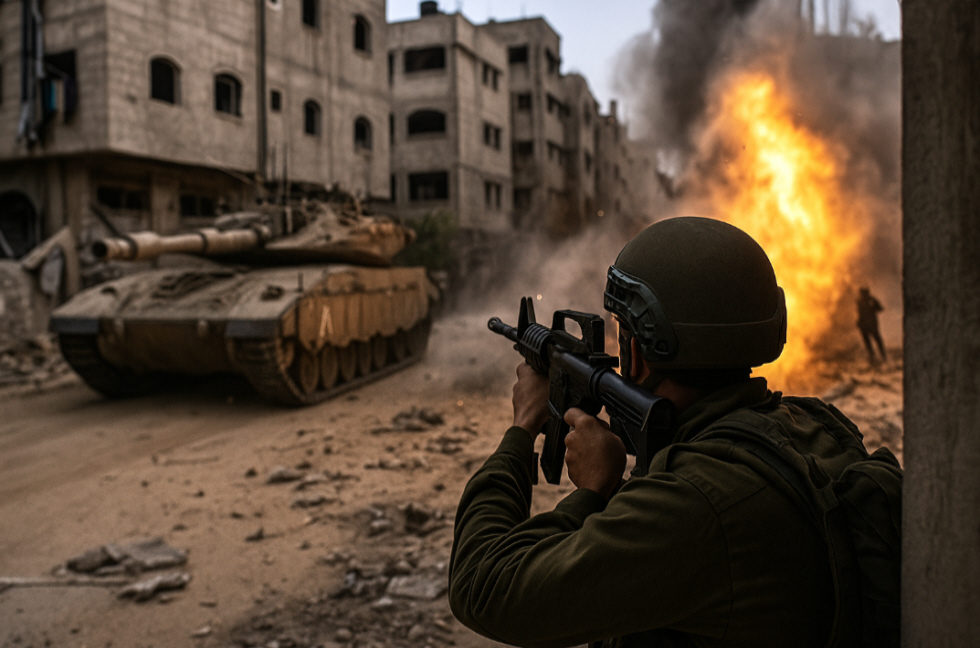
After exchanges of fire in southern Gaza, Israeli Prime Minister Benjamin Netanyahu ordered “intensive strikes” on Tuesday afternoon, putting the fragile ceasefire in jeopardy once again. According to Gaza’s Civil Defense, at least five people were killed and several others injured in Israeli air raids on the Sabra neighborhood south of Gaza City.
Witnesses also reported artillery fire near Rafah, heightening fears among civilians as the truce edges closer to collapse. Reports indicate that before Netanyahu’s order, armed members of Hamas had fired on Israeli soldiers in southern Gaza, prompting retaliatory artillery bombardments. The prime minister’s office said the military had been instructed to carry out “massive strikes immediately” following the incidents.
It is not the first breach of the ceasefire: a week and a half earlier, an attack in Rafah killed two Israeli soldiers and wounded others. Israel responded with limited airstrikes and later reinstated the ceasefire, warning that any further violations would be met with force. At the same time, tensions are rising over the handover of deceased hostages — part of a U.S.-brokered peace plan.
Israel accuses Hamas of violating agreements, while Hamas delayed Tuesday’s scheduled transfer, citing Israeli breaches of the truce. The International Committee of the Red Cross has traditionally overseen these exchanges, but recent confusion — after Hamas returned remains already repatriated in 2023 — sparked outrage in Israel and led to new security consultations in Jerusalem. With diplomacy faltering and both sides trading accusations, the ceasefire hangs by a thread as Gaza once again faces the threat of renewed large-scale conflict.