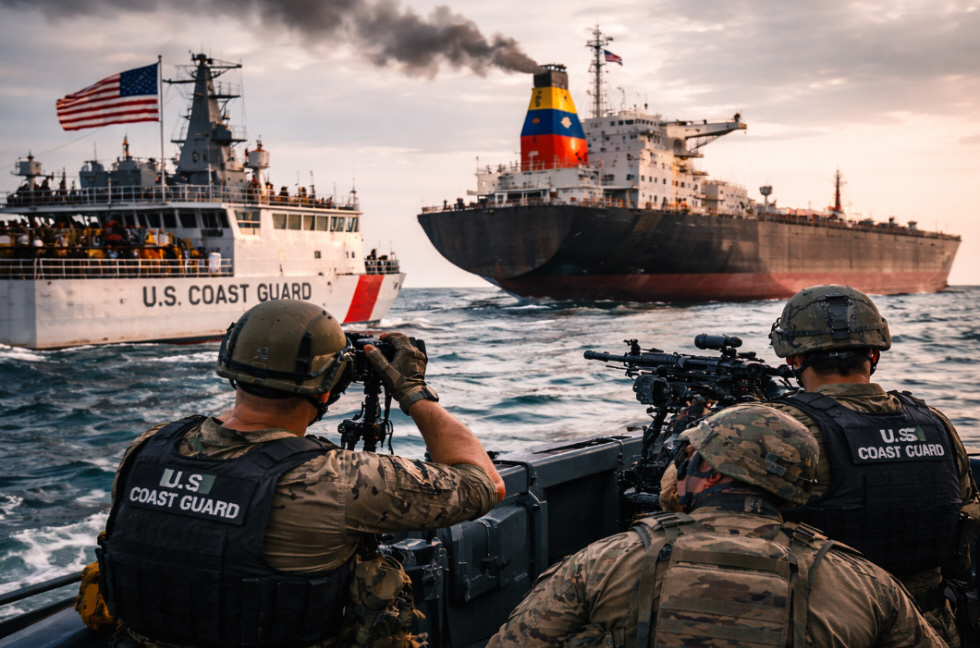
The United States has intensified efforts to restrict Venezuela’s oil exports, carrying out tanker interdictions in international waters off the South American country’s coast. The operations mark a new phase in pressure on President Nicolás Maduro’s government and have renewed debate over the legal and political limits of sanctions enforcement. U.S. officials frame the moves as part of the implementation of existing sanctions, aimed at disrupting what Washington describes as a Venezuelan “shadow fleet.”
According to this view, certain tankers operate with altered identities, flags of convenience, or opaque routes to bypass international restrictions and sustain oil revenues. The Venezuelan government strongly rejects that characterization, condemning the interdictions as violations of international law. In Caracas, authorities have denounced the actions as illegitimate pressure that directly affects national sovereignty and foreign trade, at a time when the country continues to face prolonged economic strain.
Beyond the political confrontation, critics and analysts warn that the strategy could edge toward a de facto naval blockade. They argue that systematic interference with shipping in international waters raises serious legal questions and could carry broader economic consequences, particularly if cargoes destined for third countries are affected. At its core, the dispute underscores the central role of oil as a geopolitical lever.
While Washington maintains that the measures represent strict sanctions enforcement, concerns are growing over the potential impact of sustained escalation on maritime commerce, regional stability, and volatility in global energy market