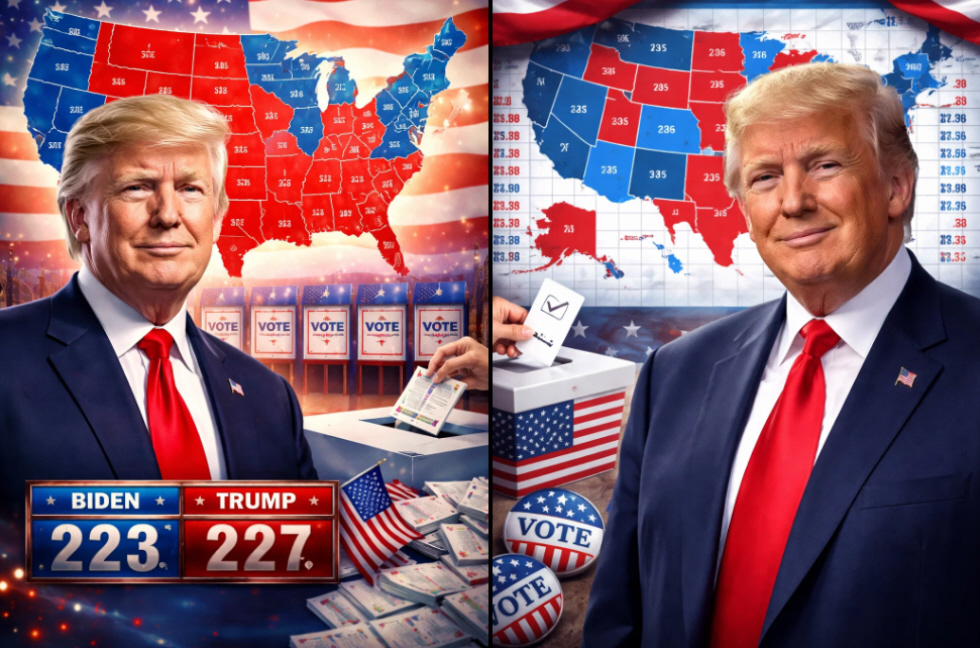
Donald Trump has once again placed the U.S. electoral system at the center of political debate by suggesting new measures that, according to him, would “repair” the country’s voting process. The president has repeatedly expressed doubts about the transparency of past elections and insists that the current model requires significant changes. In his most recent remarks, Trump raised the possibility of structural reforms that could directly influence how future elections are organized.
Although no detailed legislative proposal has been presented, his statements have sparked concern among political leaders and constitutional experts alike. The president argues that the electoral system remains vulnerable and that stricter safeguards are necessary to prevent irregularities. Among the ideas discussed within his political circle is the centralization of certain administrative aspects of elections, potentially altering the long-standing autonomy of individual states.
In the United States, election administration is primarily handled at the state level, meaning any attempt to restructure that framework would require complex legal adjustments. For that reason, analysts warn that some of the proposals being suggested could face serious constitutional challenges. Trump has repeatedly stated that his objective is to ensure “fair and transparent” elections.
However, critics interpret his comments as an effort to exert greater influence over the electoral process ahead of future contests. The debate has intensified because election rules are highly sensitive in any democracy. The structure governing U.S. elections is protected by specific legal frameworks and judicial precedents that limit executive authority in this area.
Legal scholars point out that while election laws can indeed be reformed, such changes must go through Congress and, in many cases, state-level legislative processes. Any unilateral move from the executive branch would likely face immediate court challenges. Politically, reactions have been mixed. Some members of the Republican Party support the idea of strengthening election controls, while others caution that overly aggressive reforms could provoke unnecessary controversy.
From the opposition side, leaders have emphasized that any initiative altering institutional balance must be carefully evaluated to avoid undermining public trust. The decentralized nature of the U.S. system has historically served as a safeguard against excessive concentration of power. The broader discussion also reflects ongoing political polarization across the country.
Elections have become a defining national issue, with sharply divided interpretations about how they should be administered and supervised. So far, no formal legislative proposal has been introduced to implement these ideas. Nevertheless, the mere suggestion of potential reforms has reignited debate over their legality and feasibility.
In an increasingly competitive political environment, the issue of election governance is likely to remain at the forefront. What is at stake is not only the next election cycle, but also the broader framework that defines and protects the American democratic system.