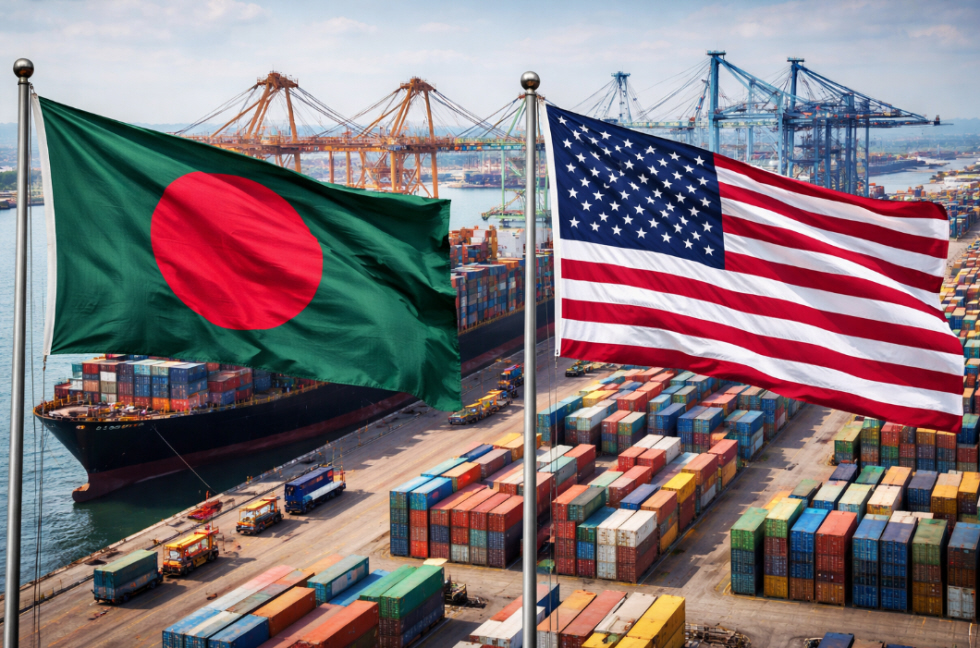
Bangladesh and the United States have reached a trade agreement that lowers tariffs on US imports to 19 percent, a move with immediate economic impact and notable political implications. The deal was finalized shortly before Bangladesh’s parliamentary elections, a critical moment when economic stability and trade policy are central to public debate.
The tariff reduction is intended to ease access for US goods into the Bangladeshi market while signaling openness and cooperation between the two countries. For the government in Dhaka, the agreement serves as an effort to strengthen market confidence and demonstrate its ability to engage in international economic negotiations during an election period.
From the US perspective, the pact improves access to a growing South Asian market and reinforces its commercial presence in a strategically important region. Economic observers view the move as a pragmatic step aimed at maintaining trade flows and avoiding disruptions that could affect supply chains. The agreement thus stands as an economic decision with political overtones, whose full impact will be assessed by voters and business stakeholders in the months ahead.