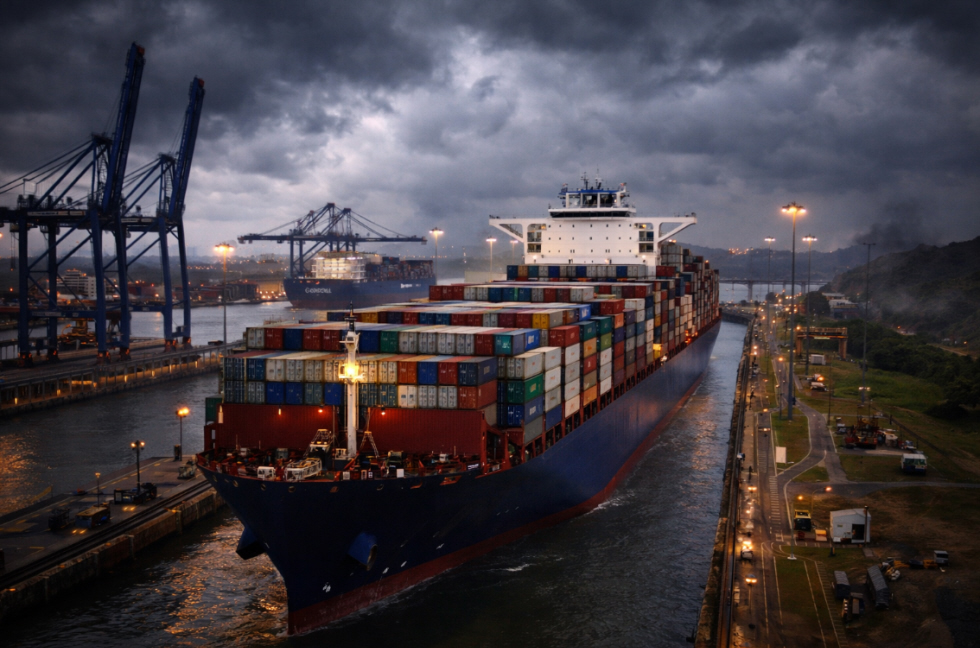
The abrupt suspension of services by Chinese state-owned shipping giant COSCO Shipping at the Pacific-side port of Port of Balboa has become the most visible commercial response to a controversial decision by Panama to take control of two strategic terminals located near the Panama Canal.
The move by Panamanian authorities has triggered legal disputes and diplomatic tensions, as control over port infrastructure connected to one of the world’s most important maritime routes carries enormous economic and geopolitical significance. The Panama Canal serves as a vital artery for global trade, linking the Atlantic and Pacific oceans and allowing thousands of cargo vessels to shorten transit times between Asia, the Americas and Europe.
Shipping analysts say that any disruption involving ports connected to the canal immediately draws attention from international logistics companies and governments alike. The decision by COSCO Shipping to suspend certain operations reflects growing uncertainty among shipping companies that rely on the canal corridor for efficient cargo movement.
The Port of Balboa, located on the Pacific entrance of the canal, plays a critical role in container handling and regional trade across the Americas. Officials in Panama argue that the move to regain control of the terminals is aimed at strengthening national oversight of key infrastructure. However, the decision has prompted diplomatic friction, particularly with China, whose companies maintain significant investments in global maritime logistics networks.
Industry observers warn that prolonged disputes could force shipping companies to adjust routes, schedules and supply chains. For now, global shipping networks are closely monitoring developments around the Panama Canal, aware that any escalation could ripple across international trade.