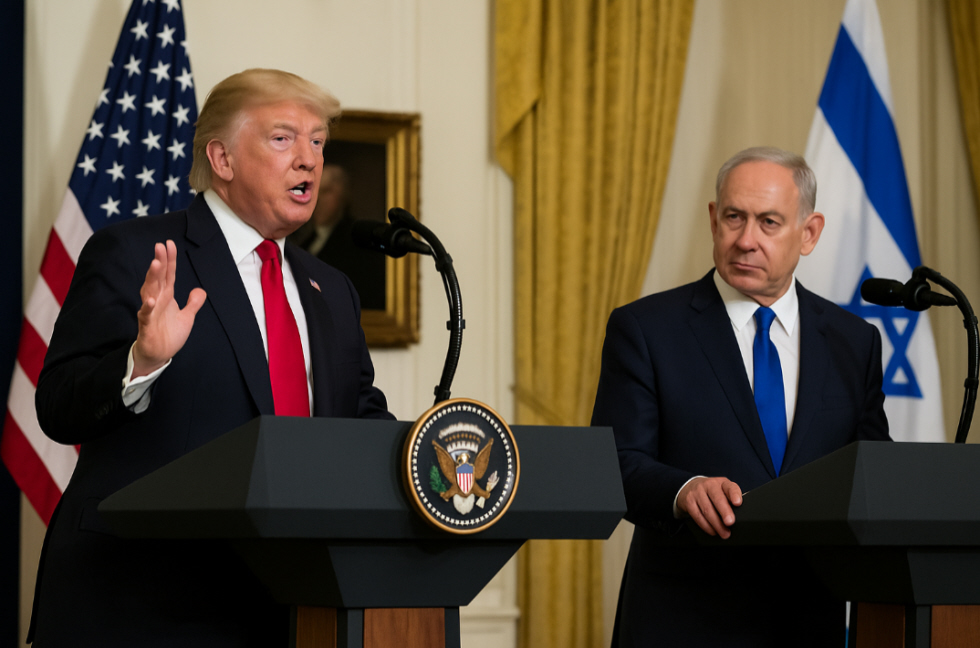
Nearly two years after the outbreak of the Gaza conflict, U.S. President Donald Trump has unveiled a comprehensive peace plan for the Middle East, which he claims brings the parties “closer than ever” to achieving a lasting solution. The president stated that the conflict is now a top priority for his administration and emphasized his belief that “everyone wants to make the deal.”
The plan, titled Peace in the Middle East, was presented at the White House during a meeting with Israeli Prime Minister Benjamin Netanyahu, and it outlines 20 points aimed at creating the foundation for stability between Israelis and Palestinians. The document sets clear conditions to halt the violence and begin a new political framework. Among the key provisions is the demand that all hostages be released within 72 hours if an agreement is reached. Trump also calls for Arab and Muslim states to oversee the disarmament of Hamas, including the destruction of tunnels, weapons, and its military infrastructure.
At the same time, the plan proposes the creation of local police forces to ensure order in Gaza and the launch of reconstruction projects to build “wonderful modern cities” that would strengthen the coastal enclave economically and socially. A central point in the plan is that “no one is forced to leave Gaza,” a statement meant to calm fears among the Palestinian population of a possible forced resettlement.
The plan envisions a phased withdrawal of the Israeli army from Gaza, while Hamas fighters who wish to leave the territory would be granted safe passage. In addition, the remains of murdered hostages would be returned to their families as a humanitarian gesture. The proposal has already received approval from Israel, with Netanyahu confirming his acceptance. Hamas, meanwhile, said through a representative that its negotiating team would review the plan “in good faith” before delivering an official response. It was confirmed that the framework was delivered to Hamas by mediators from Qatar and Egypt, who, along with the United States, are acting as guarantors of the process.
In parallel with these diplomatic efforts, Netanyahu apologized to Qatar after an Israeli strike against Hamas leaders on Qatari soil, which resulted in the death of a local security officer. According to Israeli media outlets such as Channel 12 and ynet, Netanyahu expressed regret in a phone call with Qatar’s Prime Minister, Mohammed bin Abdulrahman Al Thani, although his office declined to comment officially. The operation, carried out three weeks ago, marked Israel’s first military action inside the Gulf emirate.
The incident added further tension, as Qatar, a key U.S. ally in the region, strongly condemned the strike, with Washington also voicing criticism over the violation of Qatari sovereignty. Trump’s new peace plan seeks to establish a long-term framework “forever,” as he described it, while also reinforcing his personal ambition of being considered for the Nobel Peace Prize. The proposal will be analyzed in the coming days by the parties and the international community, in a scenario where the pursuit of peace continues to clash with the fragility of diplomacy and the lingering scars of conflict.