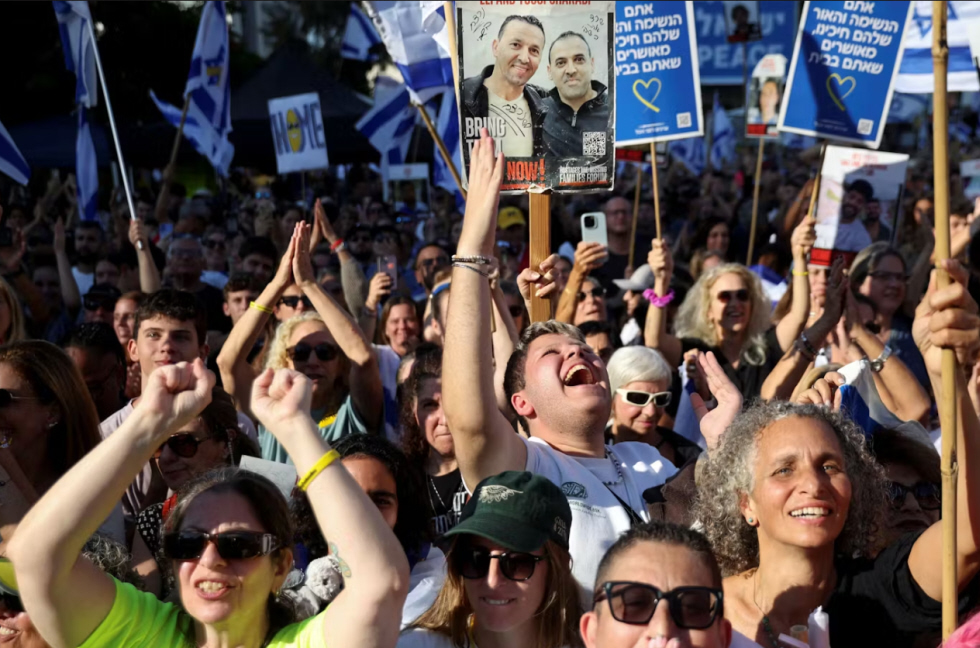
Relief over the release of 20 surviving hostages now coexists in Israel with growing frustration: only a few of the bodies of deceased hostages have been returned. That emotional contrast—relief and grief—is shaping the public conversation. Defense Minister Israel Katz accused Hamas of violating the terms of the newly agreed cease-fire. In his view, the breach is not only humanitarian (regarding the return of those who died) but also operational, with incidents around points of contact.
On Tuesday, an Israeli drone strike was reported in the Gaza Strip. According to the Palestinian agency Wafa, at least six people were killed in the Shejaiya district. Wafa cites local medical sources and describes fire directed at people in the area. The Israel Defense Forces (IDF) said that several people approached Israeli positions and posed a threat to soldiers.
After repeated warnings went unheeded, troops opened fire to “eliminate the threat,” the military said, again urging civilians not to approach military sites. The flashpoint is how each side interprets the cease-fire. From Israel’s perspective, approaching military positions during the truce violates the agreement. For hostage families and humanitarian groups, any escalation on the ground erodes the trust needed to advance exchanges, search efforts for the missing, and the return of remains. In parallel, Qatar confirmed that talks have begun on the next phase of the understanding.
“Discussions in Sharm el-Sheikh are already underway,” said Majid al-Ansari, the Foreign Ministry spokesperson. Officials stress that all parties are working “day and night” to avoid a “time gap” between phase one and phase two of the indirect talks between Hamas and Israel. “The next steps will be very difficult,” mediators acknowledge. In practice, this means moving on three fronts at once: the humanitarian (safe access to aid, medical care, protection of civilians), the sensitive humanitarian track (living hostages, locating and returning the deceased), and the technical-military track (verification mechanisms for the cease-fire and clear protocols around installations and armed positions).
Trust is the scarcest resource. To sustain the truce and open the door to a broader deal, it will be essential to contain incidents, meet deadlines, and clarify procedures: who verifies, how violations are reported, what happens if there are new casualties, and how civilians are protected in densely populated areas. For now, the process advances between concrete steps (releases) and clashes that threaten to undo the progress made.
The immediate priority—mediators agree—is to shield the humanitarian track and keep dialogue continuous, while families awaiting news—of both the survivors and the deceased—seek clear answers and strict adherence to commitments.