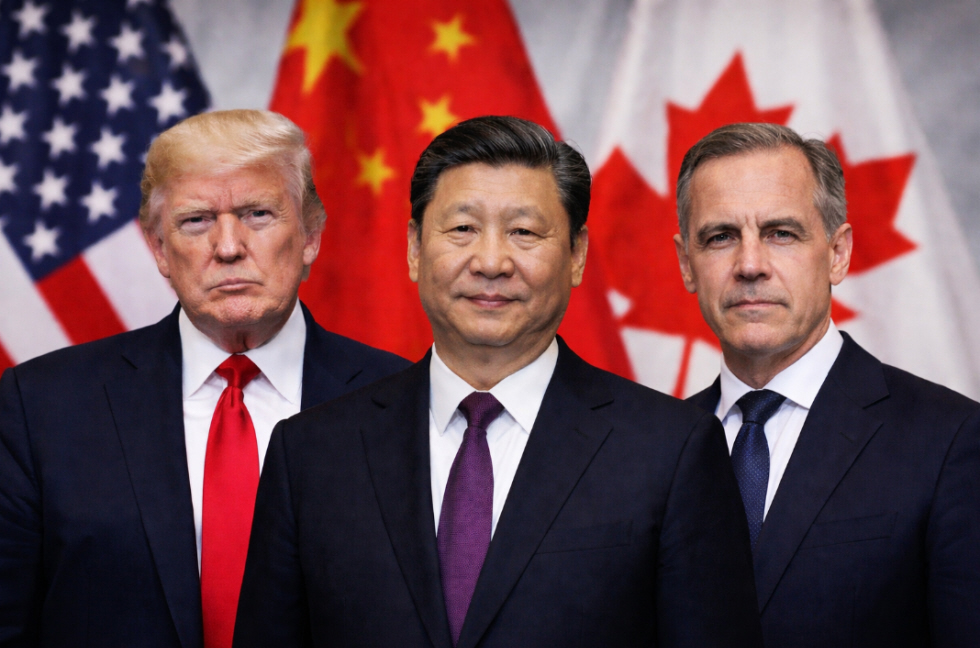
President Donald Trump reiterated his warning to Canada, threatening a “very strong” response if the country moves forward with a trade agreement with China. The remarks, made over the weekend, represent the latest escalation in a series of statements that have increased tensions between the two neighboring countries. Trump argued that his administration does not want China to expand its economic influence over Canada, framing the potential agreement as a strategic concern. In that context, he again raised the possibility of imposing 100 percent tariffs on Canadian goods should Ottawa finalize a trade deal with Beijing.
The warnings have extended beyond general trade issues. In recent days, Trump also threatened to impose punitive tariffs of 50 percent on aircraft manufactured in Canada, a move that would directly impact the country’s aerospace industry. He further suggested revoking certifications from manufacturers such as Bombardier. Trump justified his position by claiming that Canada has refused to register certain aircraft models produced by U.S.-based manufacturer Gulfstream.
Legal experts, however, have noted that the authority to revoke aircraft certifications lies with the U.S. Federal Aviation Administration, which allows such actions only on safety grounds, not economic disputes. Industry representatives and labor unions have warned of serious consequences if these measures are pursued. U.S. airlines including American Airlines and Delta Air Lines rely on Canadian-built aircraft for many of their regional routes, raising concerns about disruptions across the aviation sector.
In Canada, Trump’s comments sparked political and economic unease. Reports suggesting possible U.S. support for separatist movements in the province of Alberta have added to domestic sensitivities, amplifying the controversy surrounding the broader bilateral relationship. The renewed escalation comes at a time when Ottawa is reassessing its foreign and trade policies.
Canadian Prime Minister Mark Carney has been advocating for greater economic independence from the United States in response to what he views as increasingly unpredictable U.S. trade practices. Carney has publicly warned of the erosion of a rules-based international order and has called on other countries to coordinate efforts to counter this trend. Against this backdrop, Trump’s latest threats contribute to a climate of uncertainty that could reshape U.S.–Canada political and trade relations in the months ahead.