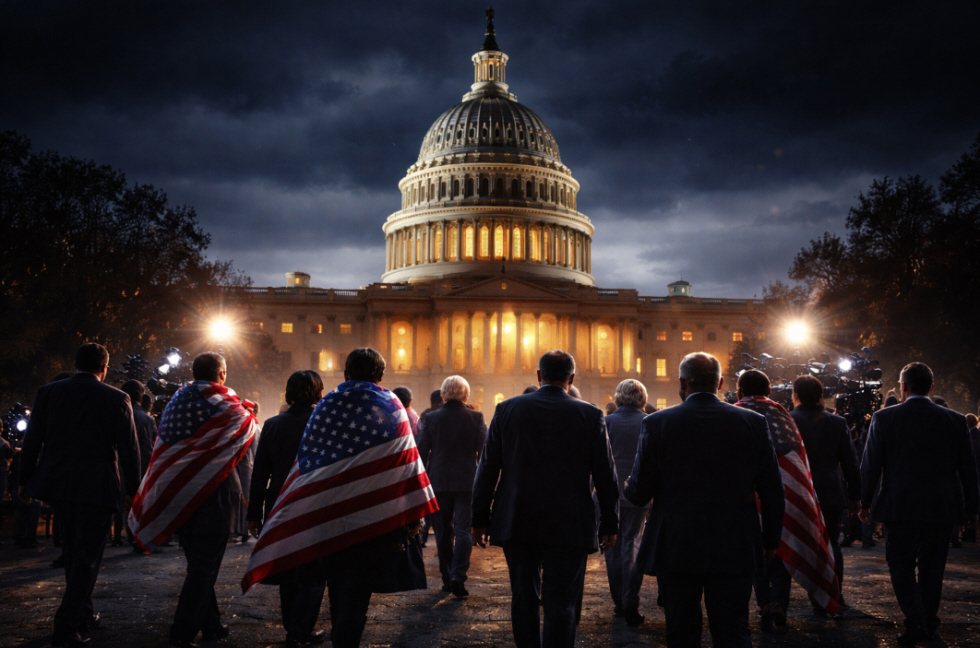
At least a dozen Democratic senators and representatives have announced they will not attend President Donald Trump’s upcoming State of the Union address, choosing instead to participate in a rally at the National Mall. The decision marks another visible sign of the growing political tension in Washington. According to the lawmakers involved, the boycott is intended to send a message of protest against policies advanced by the Republican administration.
For these members of Congress, attending the president’s address would amount to endorsing an agenda they view as divisive and harmful to certain segments of the population. The White House responded swiftly. A presidential spokesperson described the move as unsurprising and defended the speech as a celebration of policies that, in the administration’s view, have benefited millions of Americans. The exchange underscores the confrontational tone that currently defines national politics.
Traditionally, the State of the Union serves as a moment of national visibility, where the president outlines legislative priorities and highlights achievements before Congress and the country. In recent years, however, the event has also become a stage where partisan divisions are openly displayed. While congressional boycotts are not unprecedented in U.S. political history, this announcement reflects the depth of polarization shaping the current political climate.
Ideological differences between Democrats and Republicans have intensified across issues such as economic policy, immigration, national security, and civil rights. By attending an alternative rally, Democratic lawmakers aim to shift media attention toward their own policy concerns and reinforce their message to supporters. The move can also be interpreted as part of a broader electoral strategy in an increasingly competitive political environment.
For the Republican administration, the absence of these lawmakers may be used to emphasize what it describes as a lack of bipartisan cooperation. As a result, the event is likely to function not only as a presidential address but also as a barometer of political division on Capitol Hill.
Beyond the immediate optics, the episode illustrates a broader reality: bipartisan consensus has become increasingly difficult to achieve. The planned boycott symbolizes an era in which political gestures carry significant media weight and public confrontation often replaces institutional dialogue.