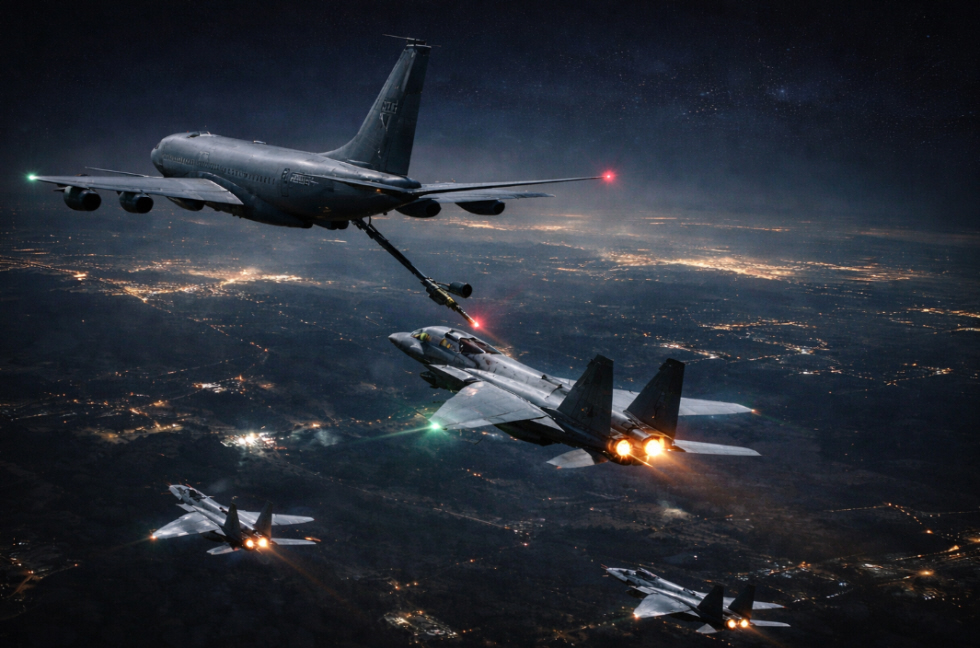
A sudden increase in U.S. aerial refueling aircraft movements has intensified speculation about a potential American response to Iran, following recent missile-related activity in the region. Flight-tracking observers noted an unusual surge in strategic air operations over the past several hours. Independent aviation analysts documented at least 17 tanker aircraft movements within an eight-hour window.
These refueling planes play a critical role in extending the operational range and endurance of fighter jets and long-range bombers. The timing of the activity coincides with new reports of missile developments linked to Iran, adding to an already tense regional atmosphere. While no official confirmation of imminent military action has been issued, the pattern has drawn attention from defense observers. Large-scale tanker mobilizations are rarely random, as they require coordinated logistical planning. However, such movements can also be part of routine exercises, readiness drills, or precautionary positioning designed to reinforce strategic flexibility.
In periods of geopolitical strain, logistical deployments are often interpreted as signals of preparedness rather than declarations of intent. Military posture and diplomatic messaging frequently operate simultaneously in high-stakes environments. So far, U.S. officials have not publicly announced changes to force posture beyond standard operational adjustments.
There have also been no formal statements indicating a direct escalation. The Middle East remains a region of heightened sensitivity, where even routine movements can be viewed through a strategic lens.
Monitoring platforms and open-source intelligence communities continue to analyze the developments closely. For now, the documented activity fuels analysis and speculation, but the broader situation remains fluid. In volatile geopolitical climates, observable military movements do not automatically translate into immediate action.