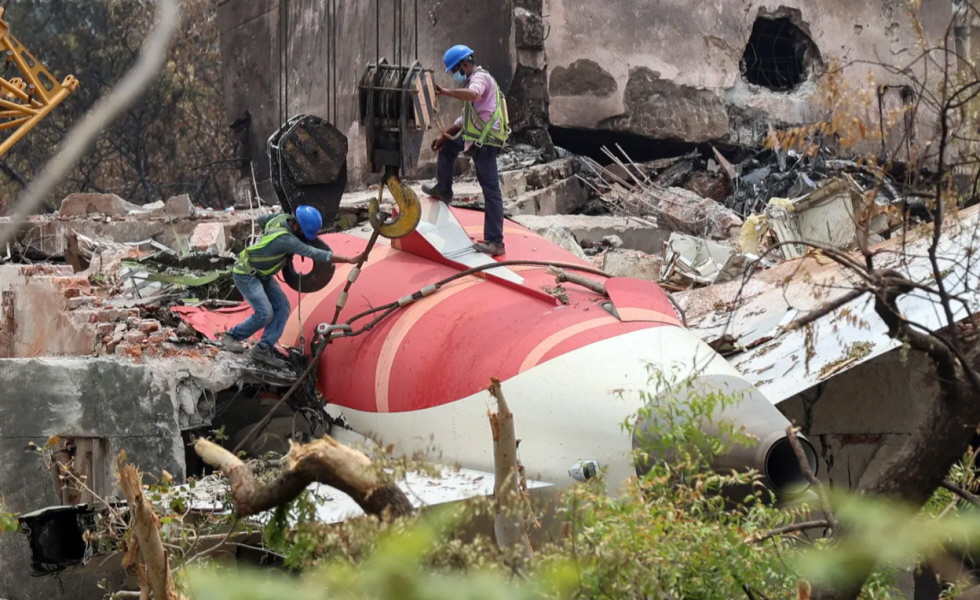
During investigations following the crash of an Air India aircraft on June 12 in Ahmedabad that resulted in 260 fatalities, experts have almost certainly identified the cause of the accident: nearly simultaneously, the fuel control switches for both engines had jumped to the "off" position. There was confusion in the cockpit about why this had happened. According to the report, there was a sudden loss of thrust, and the Boeing 787 Dreamliner began to lose altitude.
It remains unclear why the switch positions changed. In the recovered cockpit voice recorder, one of the pilots can be heard asking the other why he had activated the fuel switch (see image below), and the report continues: "The other pilot responded that he did not do it." It is still unknown whether the response came from the captain or the first officer. U.S. Expert: Switches Cannot Be Activated Accidentally American aviation expert John Cox stated that a pilot cannot accidentally operate the switches.
"You can’t just bump into them and they move." Airport surveillance cameras showed that the aircraft’s emergency system, known as the Ram Air Turbine, had deployed as the plane initially ascended, the report continues. The system consists of a small turbine and generates hydraulic or electric power from the airflow. In emergencies, it deploys from the fuselage or the wing. Bird Strike Ruled Out According to the report, there is no indication of a possible bird strike.
"No significant bird activity was observed near the flight path." The aircraft had already lost altitude even before crossing the airport’s perimeter wall. Air India confirmed receipt of the preliminary report. In view of the ongoing investigations, “we cannot comment on specific details,” the airline said on Platform X. However, they emphasized that they are fully cooperating with the investigating authorities.
Both pilots were considered experienced and had a combined total of around 19,000 flight hours, over 9,000 of those on the 787. Previously, the Indian aviation regulator had warned the airline for violating prescribed duty hours for pilots. Additionally, the European Union Aviation Safety Agency (EASA) announced an investigation into the low-cost airline Air India Express.